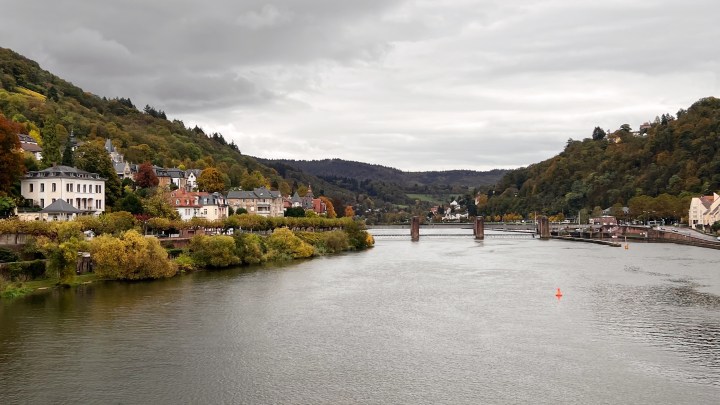
“I saw Heidelberg on a perfectly clear morning, with a pleasant air both cool and invigorating. The city, just so, with the totality of its ambiance is, one might say, something ideal.”
Johann Wolfgang von Goethe
I recently took a trip to Germany and France. First stop on my trip was Heidelberg, a quaint city located along the Neckar River in the German state of Baden-Württemberg. One of its most famous attractions is Heidelberger Schloss (Heidelberg Castle) that sits on the lower slope of the Königstuhl (King’s Chair) hill in the Odenwald mountains. The weather was cold and rainy and perfect.
The Hotel
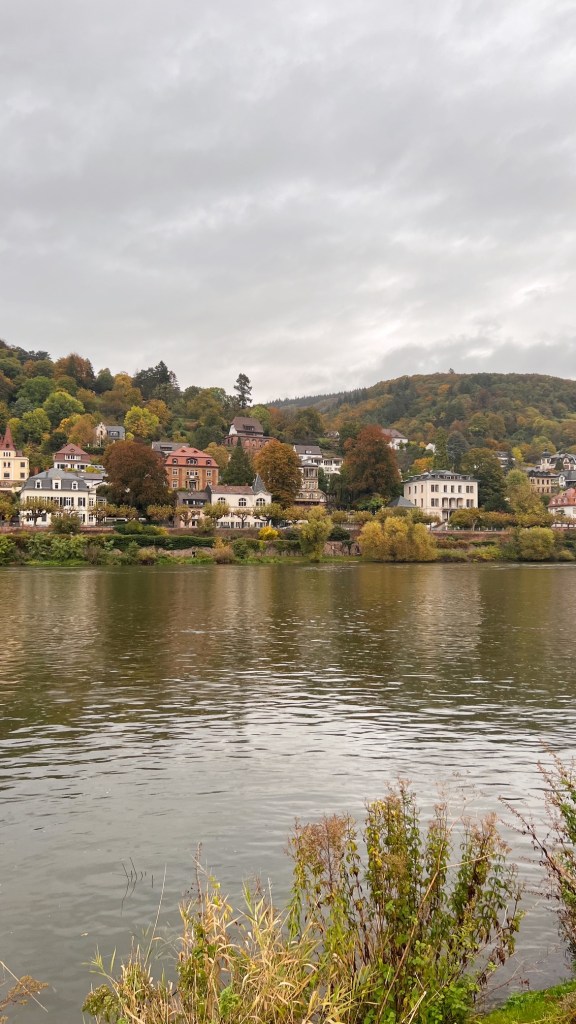
I got a room on the second floor with a river view and in the room there was an alcove with three windows that jutted out. All three windows could be opened and the smell of rainfall permeated the room every morning and every evening. When the drapes were open, I could look out onto the roof of the restaurant and the little courtyard next to the walking path. Beyond the walking path was the river and I could hear the rain breaking the surface of the gently undulating current. I felt like was sitting on the bank of one of the creeks in the mountains that I would visit as a child. The air was fresh and chilly and invigorating. In the alcove there was a comfortable armchair with a small table and I sat there each night and reviewed the day’s activities. The first day there the hotel gave me a nice bottle of sparkling water as a welcome gift.
The City
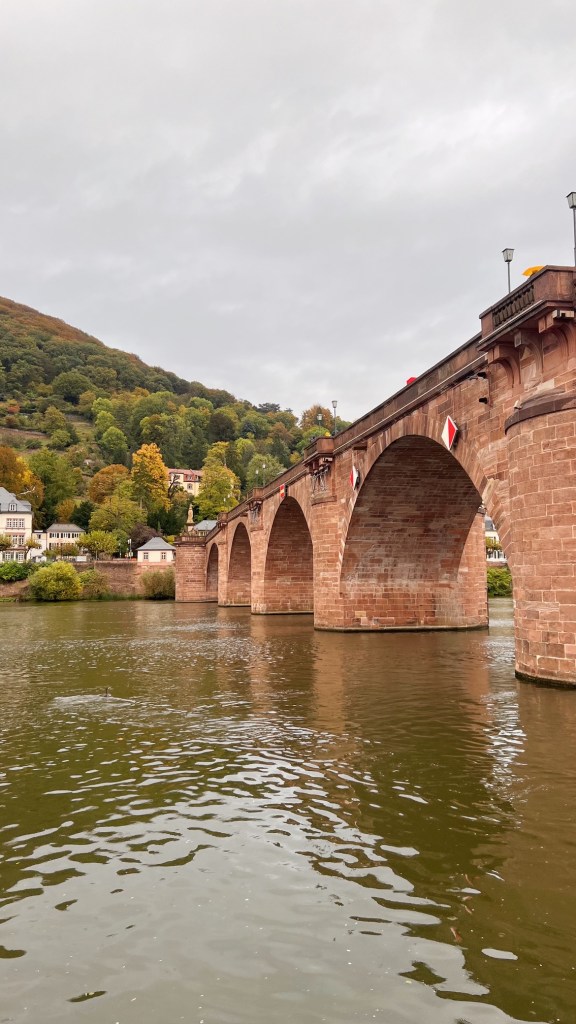
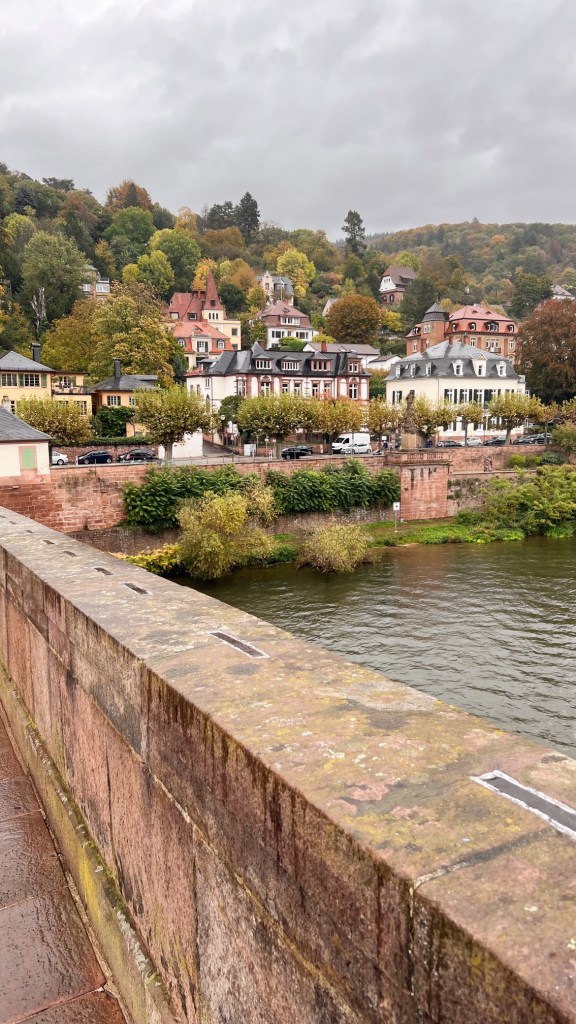
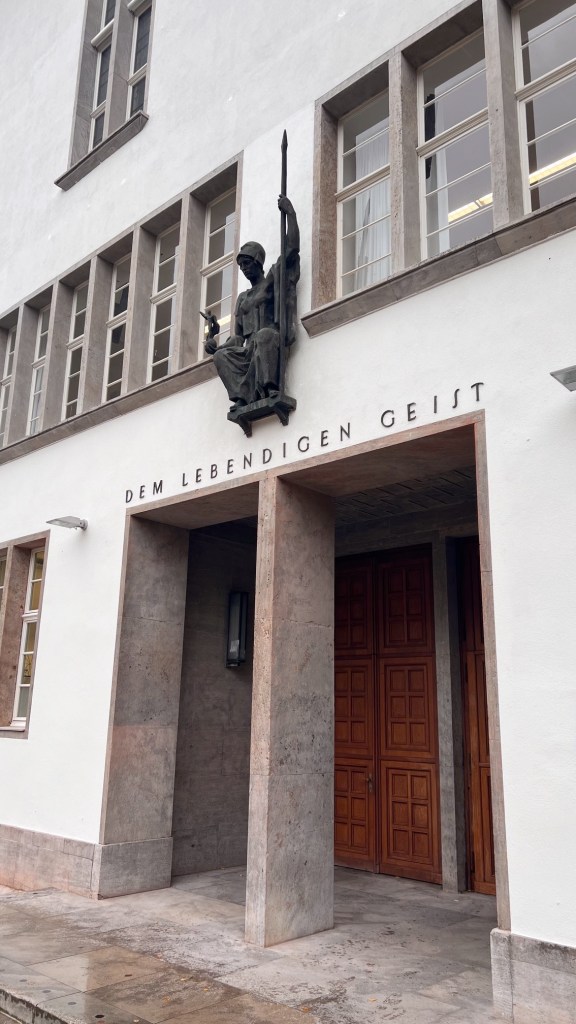
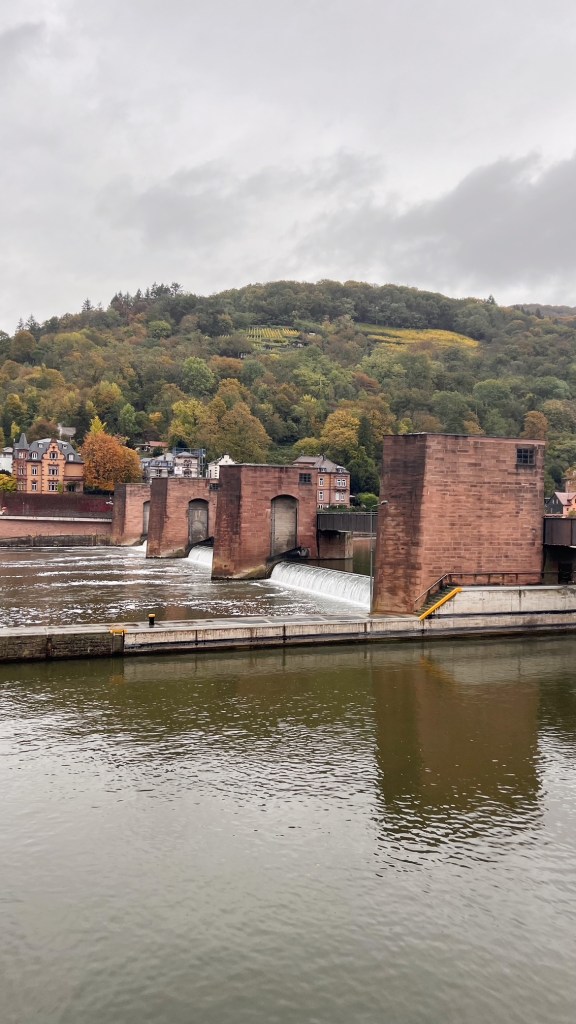
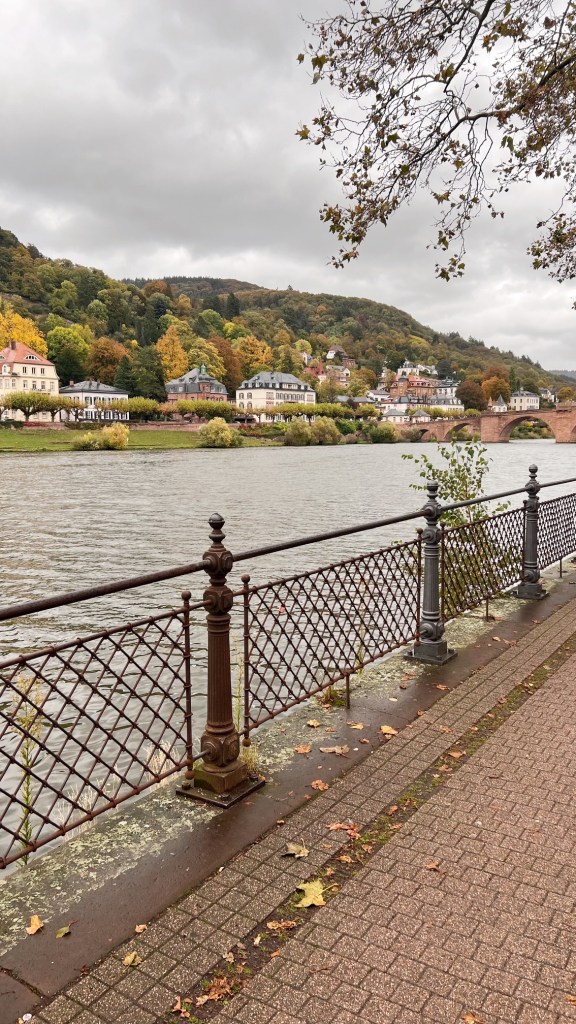
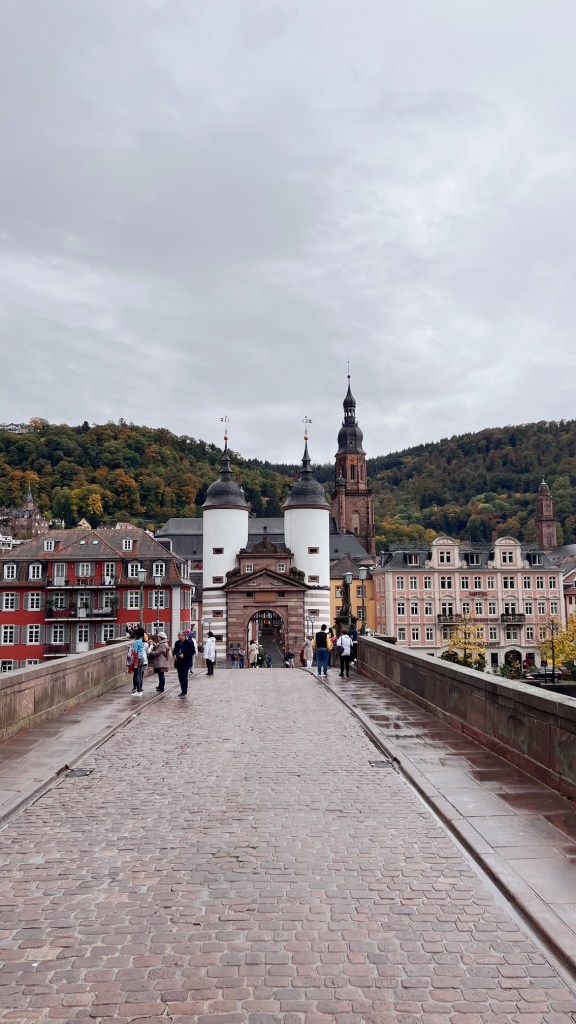
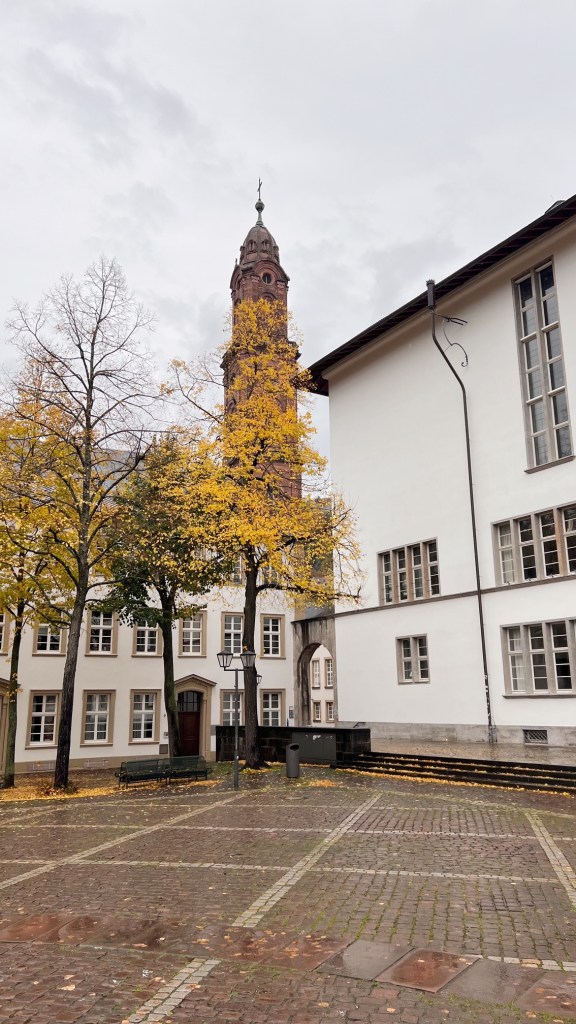
Heidelberg is a university city. These are my favorite types of cities. Long ago someone smartly recognized that the key to intellectual stimulation was to put a university in the center of a walkable city and surround it with trees and beautiful buildings. The university in Heidelberg is situated between the castle and the river. It is the oldest university in Germany and one of the oldest universities in Europe. There are many historic buildings and churches and each are centered around scenic squares. My favorite square was Universitätsplatz (University Square). The square was lined with trees in their fall foliage and there were benches and streetlamps and places to park your bike. I would have loved to go into the university library but they were doing repairs on the outside and I wasn’t sure if it was open. Walking east away from the university into the Altstadt (Old Town) I arrived at the Heiliggeistkirche (Church of the Holy Spirit). The church was built over the course of a few hundred years in a combination of Gothic and Romanesque styles. The Altstadt had lots of old buildings and scenic side streets that led down to the river. Walking away from Heiliggeistkirche towards the river I arrived at the Alte Brücke (Old Bridge) and its iconic brückentor (bridge gate). The brückentor is interesting because it is flanked by two white cylindrical towers that are topped with ornate cupolas. When I got to the bridge the rain and wind began to pick up. The umbrella that I borrowed from the hotel flipped inside out almost immediately after I stepped onto the bridge. But it held up long enough for me to take some pictures of the houses that lined the north side of the Neckar and of the Altstadt on the south side. Standing on Alte Brücke and looking south towards the Altstadt and the Königstuhl I saw the castle perched on the hill like a majestic bird.
The Castle
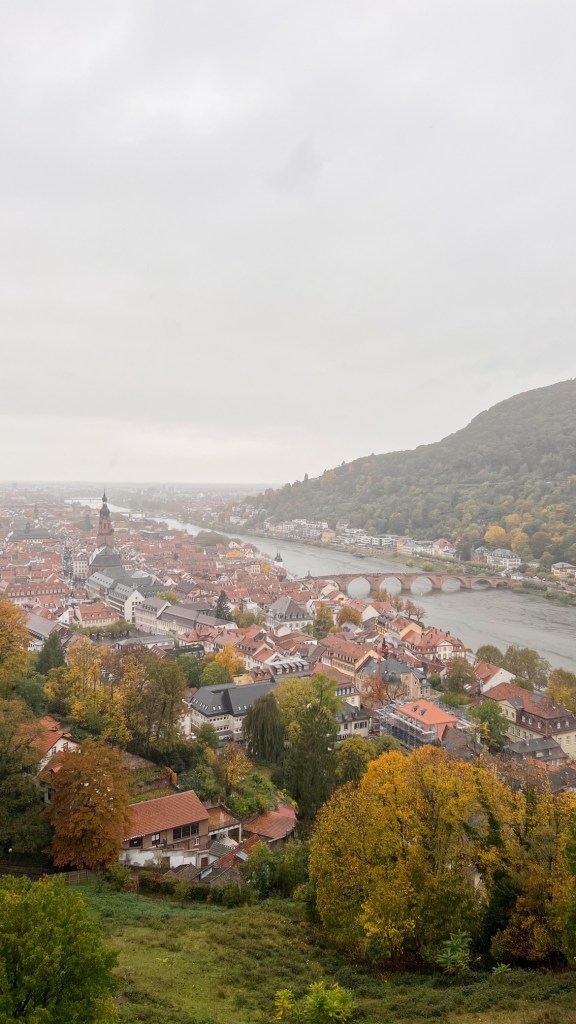
Heidelberger Schloss is one of the most iconic castles in Europe. The route up to the castle is not to be underestimated. I took what I thought was the direct route and it turned into one of the most challenging parts of the entire trip. The slope is lined with bricks and they were slick from the day’s rain. I wasn’t worried about me falling so much as the people in front of me. If one of them slipped, they would slide down the hill and collect everyone and everything in their path like an avalanche of snow clearing trees. There are two paths to take when you (finally) get to the first plateau. One leads to the gardens, which were free to tour, and the other continued on to the castle at the top of the next plateau, which cost nine euros to tour. Feeling invigorated and not at all out of breath (lying) from climbing the hill that I calculated to be a sixty-degree slope, I decided to continue onto the castle. I breathlessly gave the ticket attendant the nine euros that were burning a hole in my pocket and began walking along the castle. The castle is a ruin and so there are parts that aren’t quite intact anymore. The view from the parapets was spectacular. The brown roofs of the town, the river carving a blue gash right through the middle, the spires of the churches, the undulating support columns of Alte Brücke. As I walked towards the garden, I saw an interesting section where a large piece of the exterior wall had been blown off. The piece is still intact and is leaning against the wall it formerly occupied. In his book A Tramp Abroad, Mark Twain talked about his trip to Heidelberg Castle in 1878 and he specifically mentioned this section of wall. For me to see it all these years later in the same condition is really something. It is experiences like this that make me feel like I am part of a long tradition of tourists visiting interesting places. I felt this way when I read Goethe’s Italian Journey. Victor Hugo also wrote an essay about his trip to Heidelberg. It is in this spirit that I am writing this essay.
Adjacent to the castle is the Scheffelterrasse, which is an observation deck at the end of the Schlossgarten Heidelberg (Heidelberg Castle Garden). The garden is adjacent to the castle and forms a little plateau that provides a little buffer between the castle and the hill. The rain picked up at this point and I strolled merrily along the path by the railing and looked out onto the city. To the left was the castle. It is even more magnificent when viewed from the same elevation. The garden had long paths and majestic trees and sprawling lawns. The sound of the rain smacking my umbrella and the sound of my shoes gently crushing the gravel on the path kept me in the present. It was a perfect autumn day.
Goethe spent time walking in these same gardens. There is even a marble bust of Goethe with an inscription of a poem written to him from his friend and frequent subject of his poems, Marianne von Willemer. He had given her two leaves from a Ginkgo tree that used to stand in the garden. In his poem Ginkgo Biloba, he writes to Marianne:
This leaf from a tree in the East,
Has been given to my garden.
It reveals a certain secret,
Which pleases me and thoughtful people.
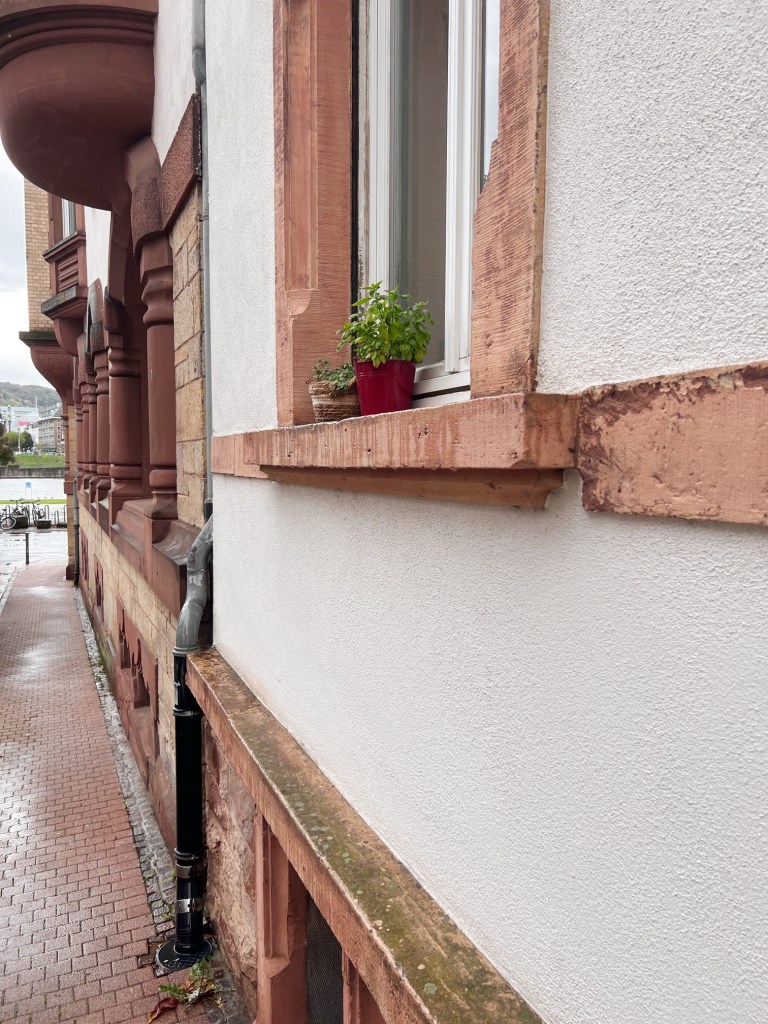
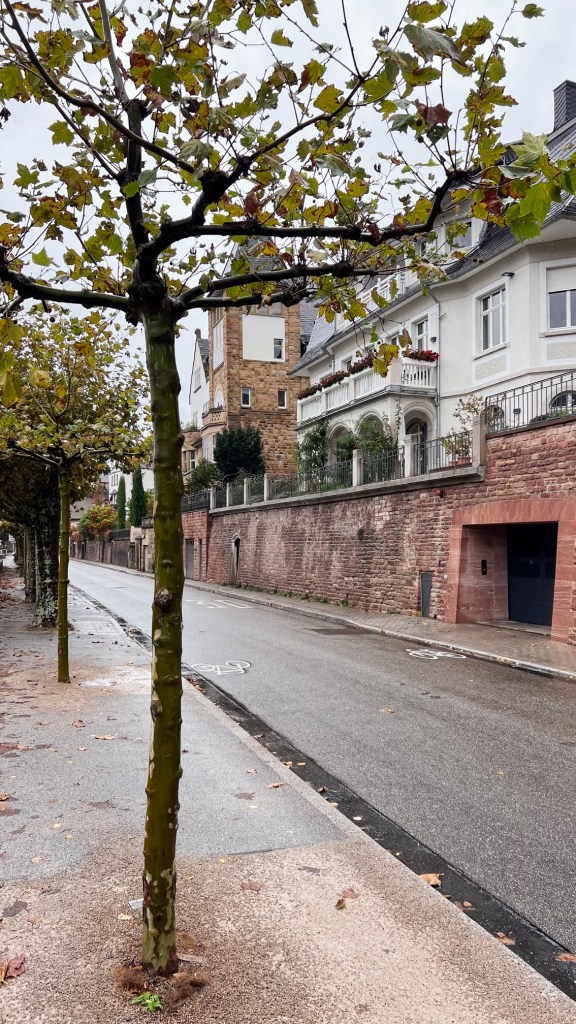
After walking through the gardens, I began to look for the exit. Below Scheffelterrasse is an asphalt-paved path complete with a protective railing on one side and a stone wall on the other side. It zigzags down the steep hill at a gentle slope. It is also textured to give the walker a non-slick surface to walk on. It is as if you are walking on level ground. The path exits at the back of a quiet street lined with houses and puts you right back into the city. Sometimes the best experiences in life require a little adversity. You have to sometimes, literally, climb that hill. And when you reach the top, you get to reap the rewards of your hard work. And if you’re lucky, as I hope we all can be in life, the way home will be gentle and easy, giving us plenty of time to reflect on all that we have experienced.
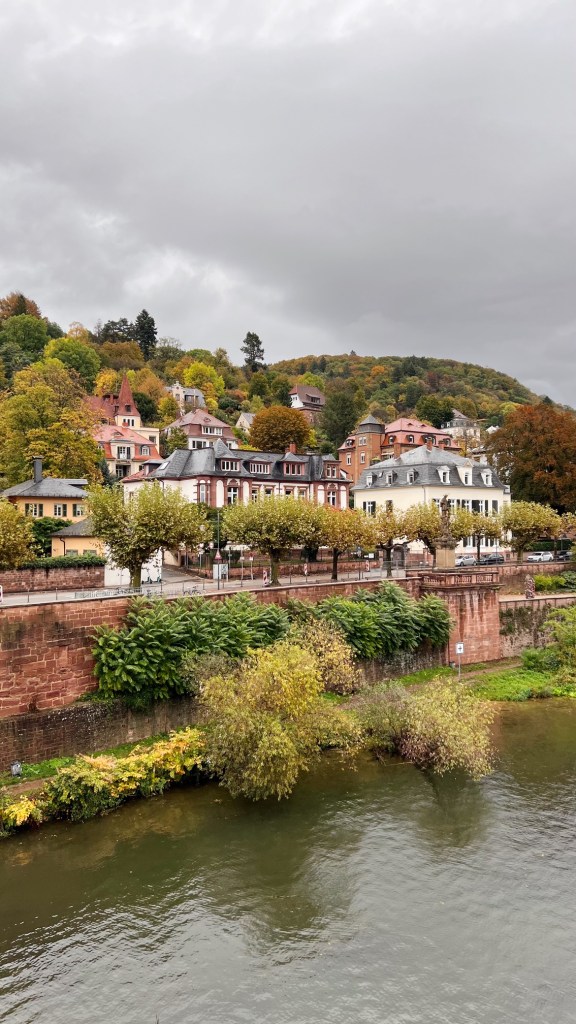
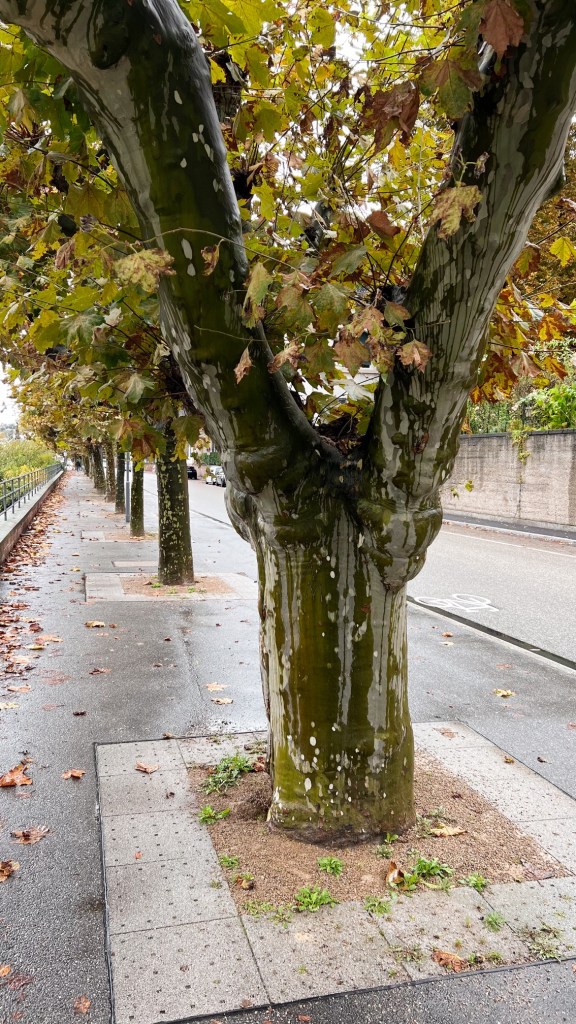
 A Walk Through The City
A wonderful travel essay! You made me view rain as an adventure, rather than something that can spoil a trip. I like how you walked in Mark Twain, Victor Hugo, and Goethe’s footsteps, alone but in the company of brilliant men who had an appreciation for what’s in front of them.
LikeLike
Thank you so much! I appreciate your comment. It was truly memorable. The rain as an adventure is a perfect description. It makes us adapt and improvise.
LikeLike