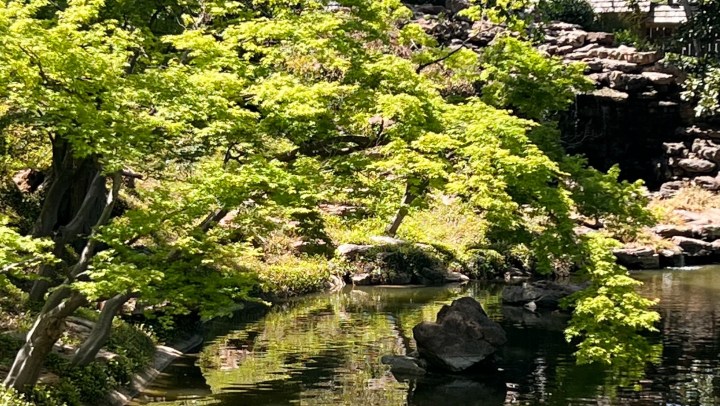
The Landscape Series: Introduction

The Landscape Series: Introduction

This essay marks the start of a new design series titled “The Landscape Series”.  The series will include six projects that will be presented in no particular order:

  • The Japanese Garden Project
  • The English Estate Project
  • The French Estate Project
  • The Backyard Project
  • The Museum Project
  • The College Project

Each design will be accompanied by an essay. The reader might recognize the Japanese, French, and English styles from the Designing A House series. In that series, I incorporated some elements from each style into the backyard. In this new series, each style will stand out on their own. My intention is to build upon those elements and create something exciting. The other three projects are more abstract, but they will revolve around a central concept. The intention here though is the same: to create something exciting. And, as always, to have fun.

The presentation will loosely follow the same structure as the Designing A House series. For the College, Backyard, and Museum Projects, we will start with some questions to identify our central concept. For the Japanese, English, and French Projects, we will review the elements that make up those styles. For all projects, we will review examples for inspiration. And as with all my essays, there will be an infusion of personal experience.

Designing A House Series: A Home Begins to Take Shape

“Unlike many architects, Wright loved designing houses. In his essay ‘The Natural House’ he wrote that a proper house should be one that is ‘integral to site; integral to environment; integral to the life of the inhabitants.’ Houses were places to be fitted to clients, like a tailor fits a suit. Their form should be so in tune with the setting as to appear that they were growing from their site, like a tree grows from the ground. He called the style ‘organic architecture.’”

Lynda S. Waggoner, Fallingwater: Frank Lloyd Wright’s Romance with Nature

It is time to continue our series on designing a house. In our last essay, we worked on the exterior design. We incorporated features from English, French, and Japanese garden design. In the essay before that we put together a preliminary layout of the house. In this essay we will focus on editing the design we put together in the previous three essays. We began by asking a few theoretical questions and we will end by answering some of those questions.

Continue reading “Designing A House Series: A Home Begins to Take Shape”

Designing a House Series: The Landscape Design

“[Those] who do not understand the science of scale, through which the geometric concept is fitted to the actual size of the landscape itself, cannot be regarded as landscape architects.”

Vincent Scully, Architecture: The Natural and the Manmade

In the previous essay in our series, we created a basic outline of the house. The focus was on the interior layout. With that finished, I would like to turn our focus to the exterior. Before we begin, let’s look at some examples of landscape design.

Continue reading “Designing a House Series: The Landscape Design”

Articulation in Architecture

A building is comprised of a series of elements, such as doors, windows, and roofs. Some elements can be structural, like the exterior walls and roof, and some elements can be non-structural, like ornaments. The elements in a building meet at a junction called a joint. Articulation refers to the arrangement of these joints in the overall architectural design. A highly articulated building emphasizes each element and so each element is independent and distinct. The opposite is a fluid articulation. Here is the emphasis is on continuity and fusion. Both styles of articulation can be visually distinctive. I like when cities feature examples of multiple styles of articulation.

Here are some examples of some visually distinctive buildings.

Continue reading “Articulation in Architecture”

Designing a House Series: The Preliminary Design

“What kind of architect puts balconies on a building that stands nose-to-nose with an elevated expressway? No one would be hanging out their sheets to dry or lingering on the balcony with a gin and tonic to watch the evening rush-hour traffic.”

Haruki Murakami, 1Q84

Balconies that don’t look out onto anything. Windows that look out onto the house next door. Narrow strips of grass labeled as a backyard. In an effort to find a compromise on budget, space, and convenience, we are forced to contend with terrible design decisions.

Continue reading “Designing a House Series: The Preliminary Design”

Designing A House Series: Questions to Consider

I am going to start a series of essays where I work out some thoughts on designing a house. The first essay in the series is going to be a list of questions that have come up during the design process. The answers to these questions can be ranked to help determine what is and what isn’t important. I may add more questions again in a future essay, but I think this is a good place to start.

Continue reading “Designing A House Series: Questions to Consider”