This is a story that I developed from a dream. The story is set in New York City on a cloudy and cold night in December where it just recently stopped raining and in a suburban neighborhood in some nearby mountains that will look like the Pacific Northwest even though that doesn’t make sense. The story isn’t set in a specific year but it is set in a time before everyone had cell phones. I think it has all the elements necessary for a good Christmas story. Rather than present the story in a traditional format, let’s do something a little more creative. Imagine this is a short film that will be aired before a feature-length film that opens on Christmas Day. You and I, dear reader, are sitting at a coffee shop and I am describing my ideas for the film to you. Here is the story.
Continue reading “A Story for Christmas”Author: Ryan VanderVelden
To Love is to Act: Thoughts on Les Misérables
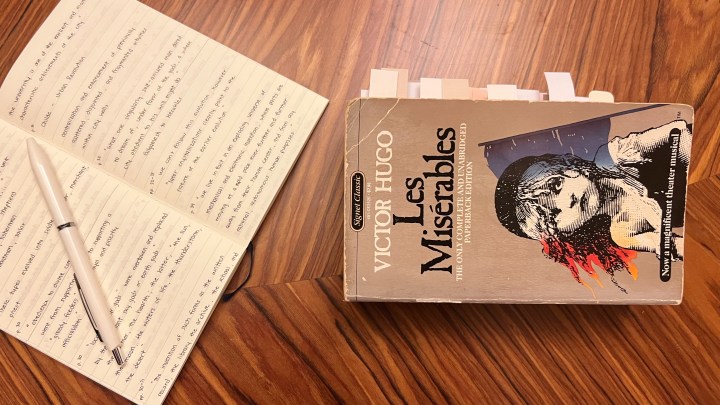
“…but they were students, and to say student is to say Parisian; to study in Paris is to be born in Paris”
Victor Hugo, Les Misérables, page 120
“He loafed. To err is human, to loaf is Parisian”
Victor Hugo, Les Misérables, page 654
“But Gavroche, who was of the wagtail species and slipped quickly from one action to another, had picked up a stone. He had noticed a street lamp.
‘Well, well,’ he said, ‘you still have your lamps here. That’s not proper form, my friends. It’s disorderly. Sorry, this will have to go!’
And he threw the stone into the lamp, whose glass fell with such a clatter that some bourgeois, hidden behind their curtains in the opposite house, cried out, ‘There’s ‘Ninety-three all over again!’”
Victor Hugo, Les Misérables, pages 1157-58
There is a passage in the introduction to Les Misérables where Lee Fahnestock writes:
“Reading Les Misérables today, nobody would deny that Victor Hugo’s prodigious flow of words occasionally produces moments of excess, when we might wish he had shown more restraint”
(Introduction xii)
I disagree. I am happy that Victor Hugo did not show any restraint in his novel. Les Misérables is unlike any book I have ever read, and I doubt I will ever read another book like it in the future. It is a sprawling epic in every sense of the word. Hugo’s text is rich in detail and description and serves as a love letter to his beloved Paris. We see Paris through his eyes, “the Paris of his youth, that Paris he devoutly treasures in memory…as though it still existed.” (Hugo 446). Paris, its history; Paris, its buildings and streets and monuments; and Paris, the stories of its citizens. Everywhere in the novel you can see Hugo’s love for Paris. He names the streets as we walk alongside his characters. He tells us where streets intersect. He describes the buildings, the doors, windows, alleyways, the houses, colors, shapes, noises. He tells us what is here now and what was there before. His knowledge is encyclopedic but at no time does it feel dull or repressive. On the contrary, these passages represent some of the best parts of the novel. Victor Hugo was at heart a poet and like his contemporaries Pushkin and Lermontov, his prose is infused with the same magic that makes his poetry so memorable. To read Les Misérables is to read an epic in prose from a master of verse.
Continue reading “To Love is to Act: Thoughts on Les Misérables”The Landscape Series: Introduction
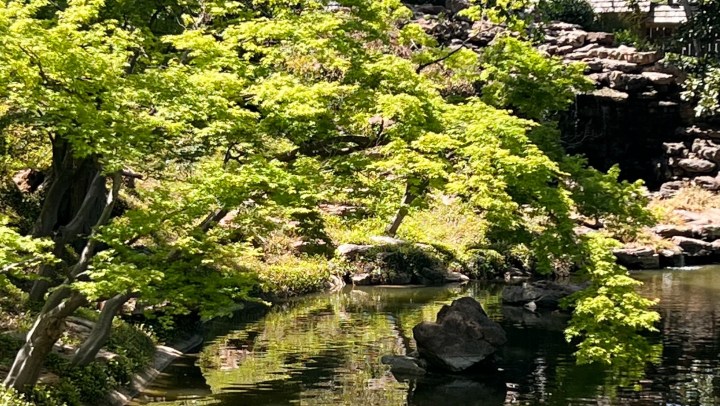
This essay marks the start of a new design series titled “The Landscape Series”. The series will include six projects that will be presented in no particular order:
- The Japanese Garden Project
- The English Estate Project
- The French Estate Project
- The Backyard Project
- The Museum Project
- The College Project
Each design will be accompanied by an essay. The reader might recognize the Japanese, French, and English styles from the Designing A House series. In that series, I incorporated some elements from each style into the backyard. In this new series, each style will stand out on their own. My intention is to build upon those elements and create something exciting. The other three projects are more abstract, but they will revolve around a central concept. The intention here though is the same: to create something exciting. And, as always, to have fun.
The presentation will loosely follow the same structure as the Designing A House series. For the College, Backyard, and Museum Projects, we will start with some questions to identify our central concept. For the Japanese, English, and French Projects, we will review the elements that make up those styles. For all projects, we will review examples for inspiration. And as with all my essays, there will be an infusion of personal experience.
Travels with Moo
In summer 2023, I put a reminder in my phone for Christmas 2023 to look for a small journal in the attic over the Christmas holiday when I would be visiting my family. I was prompted by a memory from childhood. The memory was hazy, but I saw myself in the library with my classmates at my elementary school and we were going through a box of stuffed animals that had just completed a six-month journey. Some of the animals went around the United States and some of them went around the world. The memory was a brief flash. The more I thought about it, the more elusive it was.
Continue reading “Travels with Moo”Designing a House Series: Postscript
It has been three months since I finished the Designing A House series. I posted my first essay in the series in September 2021 and posted the last essay in August 2024. The project began with a simple question: If I were to design a house, how would I do it?
Continue reading “Designing a House Series: Postscript”Designing A House Series: A Home Begins to Take Shape
“Unlike many architects, Wright loved designing houses. In his essay ‘The Natural House’ he wrote that a proper house should be one that is ‘integral to site; integral to environment; integral to the life of the inhabitants.’ Houses were places to be fitted to clients, like a tailor fits a suit. Their form should be so in tune with the setting as to appear that they were growing from their site, like a tree grows from the ground. He called the style ‘organic architecture.’”
Lynda S. Waggoner, Fallingwater: Frank Lloyd Wright’s Romance with Nature
It is time to continue our series on designing a house. In our last essay, we worked on the exterior design. We incorporated features from English, French, and Japanese garden design. In the essay before that we put together a preliminary layout of the house. In this essay we will focus on editing the design we put together in the previous three essays. We began by asking a few theoretical questions and we will end by answering some of those questions.
Continue reading “Designing A House Series: A Home Begins to Take Shape”A Long Weekend in Chicago

“As I am traveling alone this time, I have leisure to think over all I have seen and done during the past few months, and I do so with great pleasure.”
Johann Wolfgang von Goethe, Italian Journey
It was late Sunday afternoon and was standing near the lakefront looking back at the skyline at the north side of the Loop. It was pouring down rain and the tree I was standing under was providing marginal shelter at best. But I didn’t mind. Part of the fun of exploring is going out regardless of the weather. I was taking in the view and reflecting on the weekend I had.
Continue reading “A Long Weekend in Chicago”A Rainy Day in Frankfurt
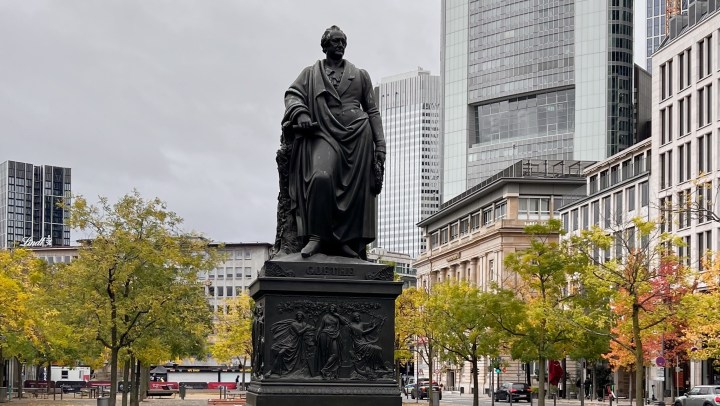
The final city I visited on my trip was Frankfurt, the largest city in Hesse, and the fifth largest city in Germany. Frankfurt lies on the river Main, which is the longest tributary of the Rhine. It is home to Johann Wolfgang Goethe-Universität Frankfurt am Main, which is named after Johann Wolfgang von Goethe, Frankfurt’s most famous former resident. His portrait hangs in Städelsches Kunstinstitut und Städtische Galerie (Städel), which is the same portrait that was used for the cover of his travelogue, Italian Journey. Its airport and main train station make it a convenient and perfect disembarkation point for a trip around western Germany. I began my journey here and here is where it ended.
Continue reading “A Rainy Day in Frankfurt”A Rainy Day in Strasbourg

The next city on my itinerary was Strasbourg, a major city in France in the Alsace region. It is located on the river Rhine, which serves as the border between France and Germany. The historic core of Strasbourg is called the Grande Île (German: Große Insel; English: Large Island) and its border is formed by the river Ill and a canal that was constructed off the Ill called the Canal du Faux-Rempart (English: Canal of the Fake Rampart). The city is home to the European Parliament, a university, a medieval church, and some beautiful parks. The Grande Île was designated a World Heritage Site by UNESCO in 1988.
Continue reading “A Rainy Day in Strasbourg”A Rainy Day in Freiburg
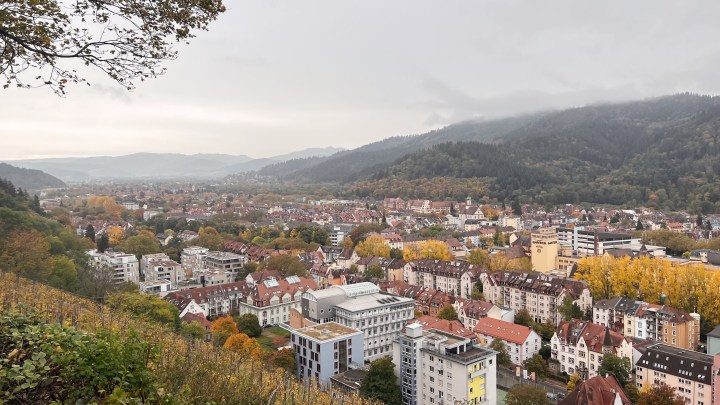
Next stop on my trip was Freiburg im Breisgau, the fourth-largest city in Baden-Württemberg. Freiburg is located on the Dreisam River, a tributary of the Rhine, and sits on the western edge of the Schwarzwald (Black Forest). Looming over the town is a large hill called the Schlossberg. It is home to a university, a medieval church, and a lot of interesting features for a wandering tourist.
Continue reading “A Rainy Day in Freiburg” A Walk Through The City