“[Those] who do not understand the science of scale, through which the geometric concept is fitted to the actual size of the landscape itself, cannot be regarded as landscape architects.”
Vincent Scully, Architecture: The Natural and the Manmade
In the previous essay in our series, we created a basic outline of the house. The focus was on the interior layout. With that finished, I would like to turn our focus to the exterior. Before we begin, let’s look at some examples of landscape design.
The French Garden
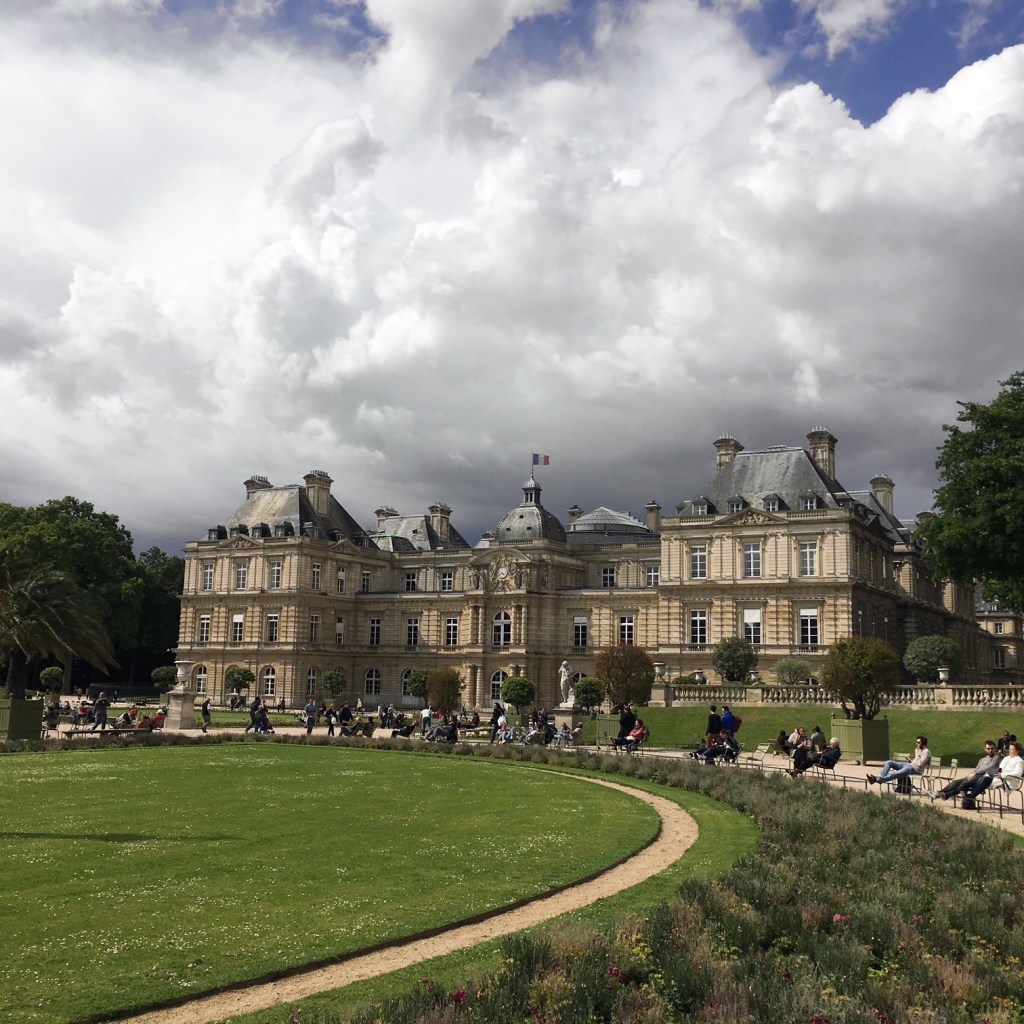
The Palace of Versailles is one of the best examples in the world of a house designed in conjunction with a garden. The original house on the property was a simple hunting lodge that was built for Louis XIII of France. The lodge was replaced by a château before Louis XIII’s death in 1643. His son, Louis XIV, assumed the throne and in 1668 he began expanding the property to turn it into the royal residence. He incorporated the original château into the new design and turned it into the property that we know today. The expansion project was led by the design team of royal architect Louis Le Vau, painter Charles Le Brun, and landscape architect André Le Nôtre. The three of them had previously worked on the design of Château de Vaux-le-Vicomte, the property owned by the eventually disgraced Superintendent of Finances, Nicolas Fouquet. Some landscape features of these two properties include water fountains, basins (bassins), stone paths, canals, and parterres. All are representative of French garden design.
In his book, Architecture: The Natural and the Manmade, Vincent Scully talks about the use of water in the French garden. He writes:
“In the Italian garden, water is the awesome gift of the earth; in the French garden, water becomes primarily the optical medium by means of which the sky is reflected.”
(Scully 248)
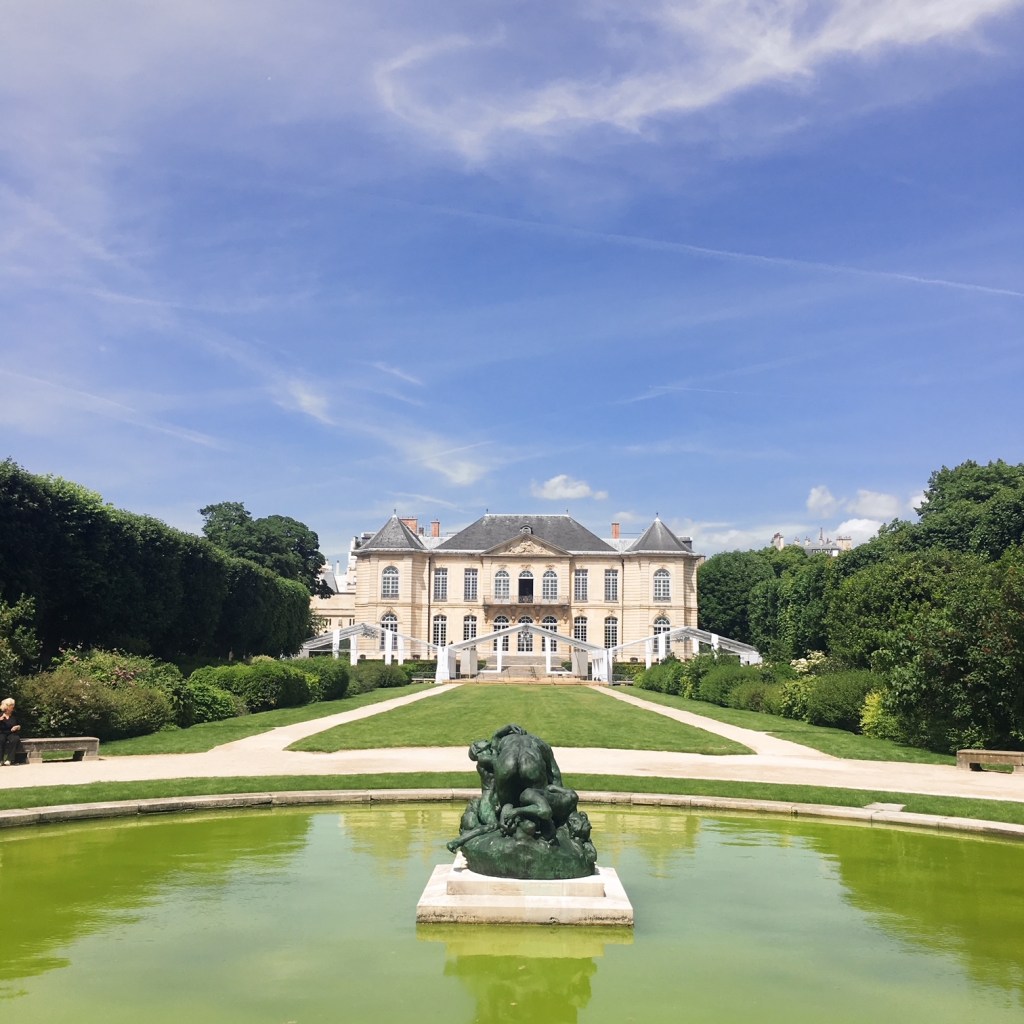
The French used the flat and circular bassin, which was “designed with a rounded rim that seems stretched so that the whole is a taut surface” (Scully 248), to reflect the sky and to turn the plane of the earth itself into a drawing. The effect is that the bassin “dematerializes the earth’s surface” (Scully 248). The circle is one of the fundamental shapes. These fundamental shapes “were regarded as the most perfect expressions of that order of the universe which also manifested itself in harmonic proportions in the visual arts and music” (Scully 233). They are also “as close to pure Idea as possible” (Scully 233). The architects of the Renaissance struggled with the abstract idea of beauty. They were designing three-dimensional shapes that had mass and occupied space. So how could they reconcile that with a dimensionless concept like beauty? The French landscape architects were able to overcome this problem with their parterres and bassins in their garden designs. The result is that the French garden becomes “pure disegno”, that is “pure surface, no depth, no mass. It is the ideal order of the universe made visible upon its face” (Scully 233).
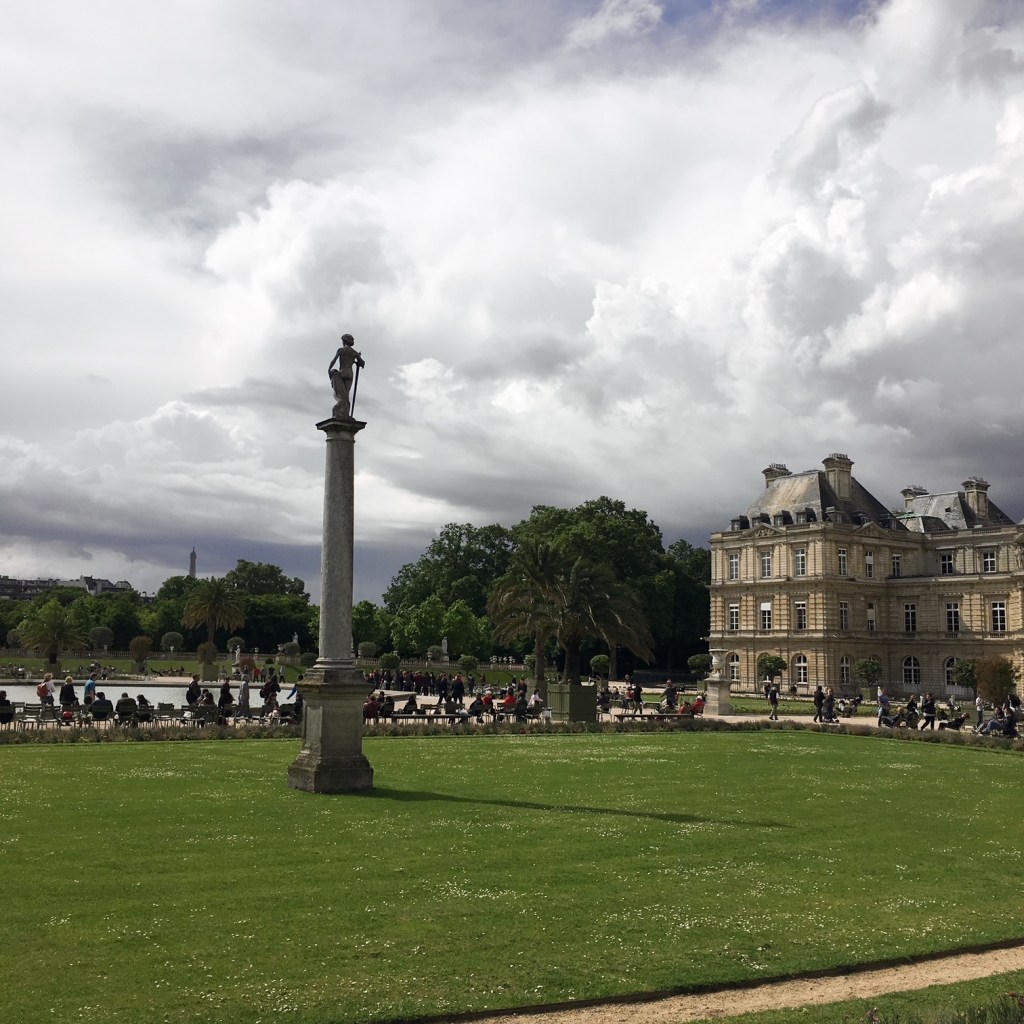
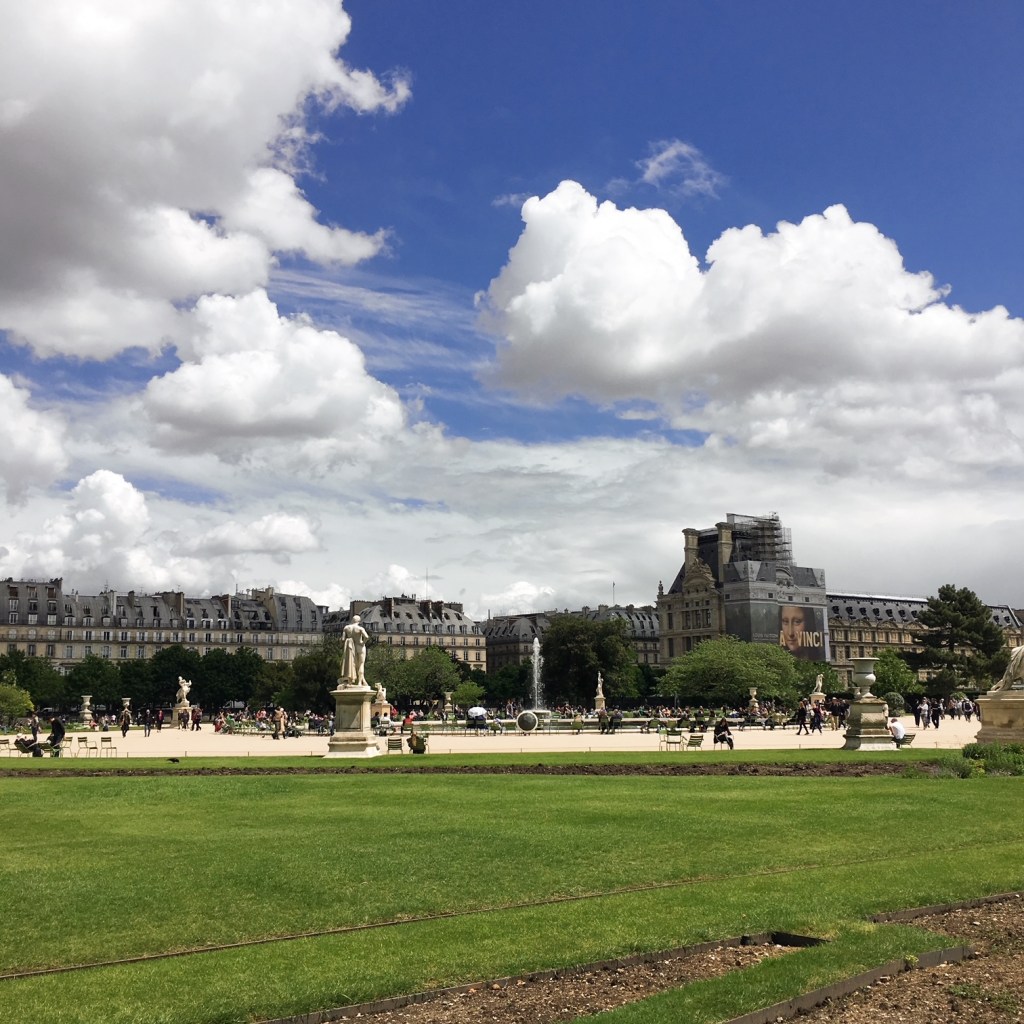
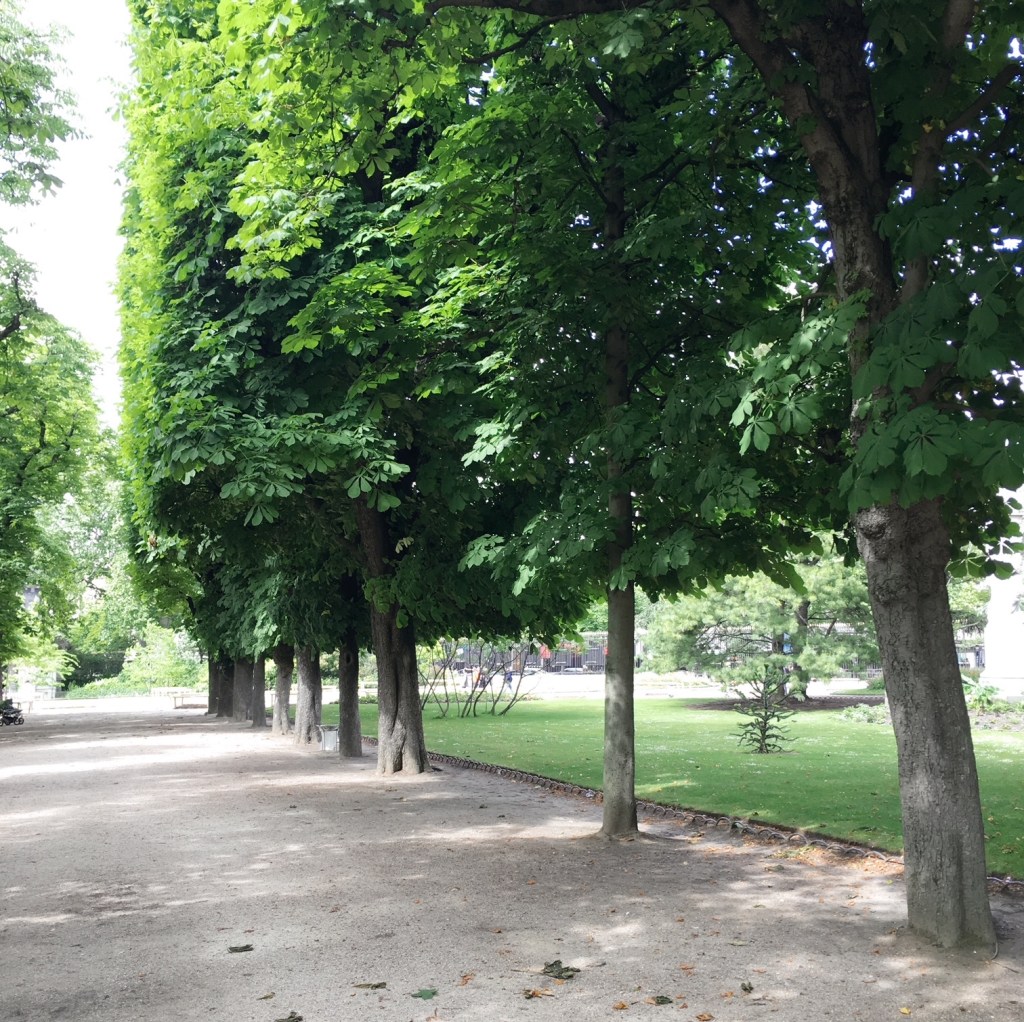
Here are some representative photos I took in Paris:
The English Garden
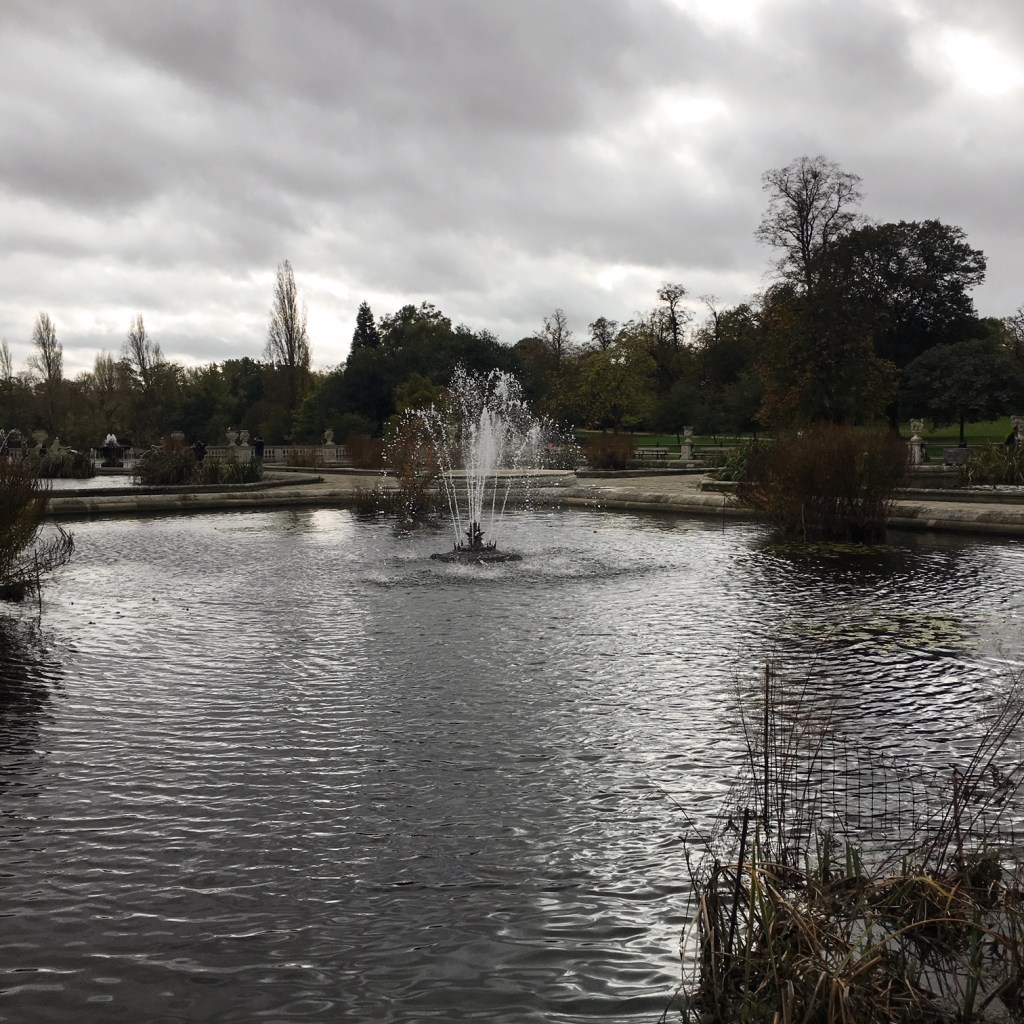
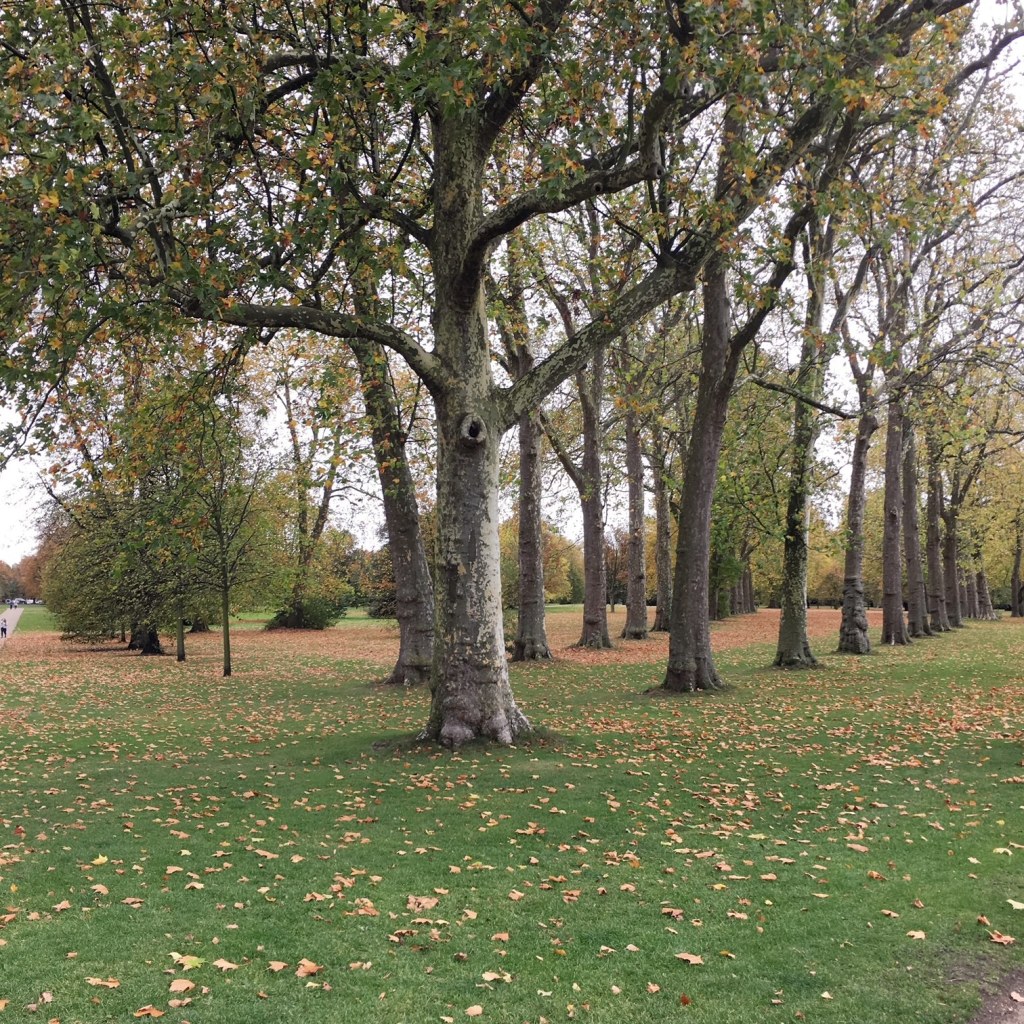
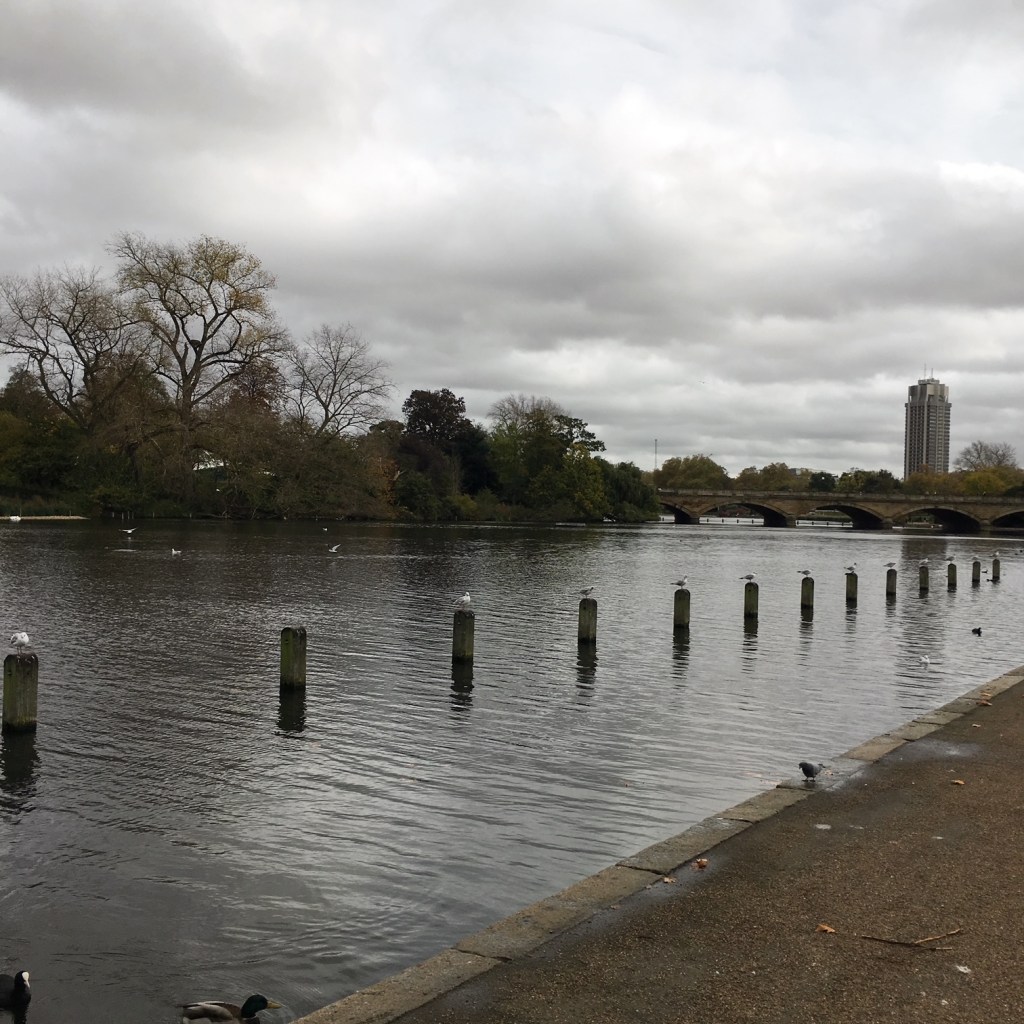
Contrasting Le Notre’s designs are the “gardenless” English landscape designs of landscape architect Lancelot “Capability” Brown. His designs featured undulating fields of grass that were punctuated by clusters of trees and ponds. The garden also went right up to the house. One of the most emblematic features of English landscape designs is a ha-ha, the invention of which predated Brown, but was a common feature of his designs, nonetheless. A ha-ha is a vertical stone wall that separates two fields but is only visible from one direction. The wall is sunk down into the ground and allows different fields to be partitioned while still preserving an unbroken view of the landscape from the primary direction, which is typically from the house. The English garden contrasted with the French garden in that it was presented as more natural. It was still designed, like the French gardens, but the design was more deceptive because it was meant to look pastoral and like it wasn’t designed. The elements that dominate English garden design is what we typically see in American parks, most notably Central Park in New York City. Vincent Scully writes:
“Here, the wild surrounds human beings but does not threaten them personally; it simply seems to make the picture real. In consequence, country-house culture became a rich blend of human artifice with what appeared to be on the whole a beneficent ‘natural’ order.”
(Scully 336)
Here are some representative pictures I took in London:


The Japanese Garden and Putting the Pieces Together
“Closeness to nature is the ultimate goal of Japanese architecture” writes Koji Yagi in his book, A Japanese Touch for Your Home. He goes on to write:
“As a result, the Japanese house plan can be described as being composed of three parts: exterior, intermediate, and interior. The exterior is of course symbolized by the garden, and the interior is where the inhabitants spend most of their time. The intermediate area is an important buffer between these two and helps draw nature into the home while still providing protection and security.”
(Yagi 8)
The last sentence in the quote above is going to be the main inspiration for this design. In Japanese design, the intermediate area is composed of three elements: a formal entranceway, a veranda, and screen devices. Koji Yagi summarizes these three spaces as follows:
“The entranceway is where the shoes are removed, symbolizing the transition from the exterior to the interior. The veranda is a multipurpose area where one can relax or entertain visitors informally. Screening devices help to unite man and nature by providing ways of allowing the inhabitants of a house to see or hear nature with little difficulty, while still protecting them from the elements.”
(Yagi 19)
As we choose elements for our design, we will want to take the use of these spaces into consideration. We will also want to consider the site itself. If we are to fit in every design element that we want, we want to make sure we have enough space to accommodate them all. We also shouldn’t limit ourselves. We should also put in everything we want into our design and adjust from there. It will be easier to remove elements from the design as opposed to adding them in as an afterthought.
The intermediate area we identified earlier as the main inspiration will connect the interior and exterior. This will give our design a sense of completeness. The secondary inspiration will be summarized by the following phrase: everywhere you stand, there should be something pleasant for you to look at.
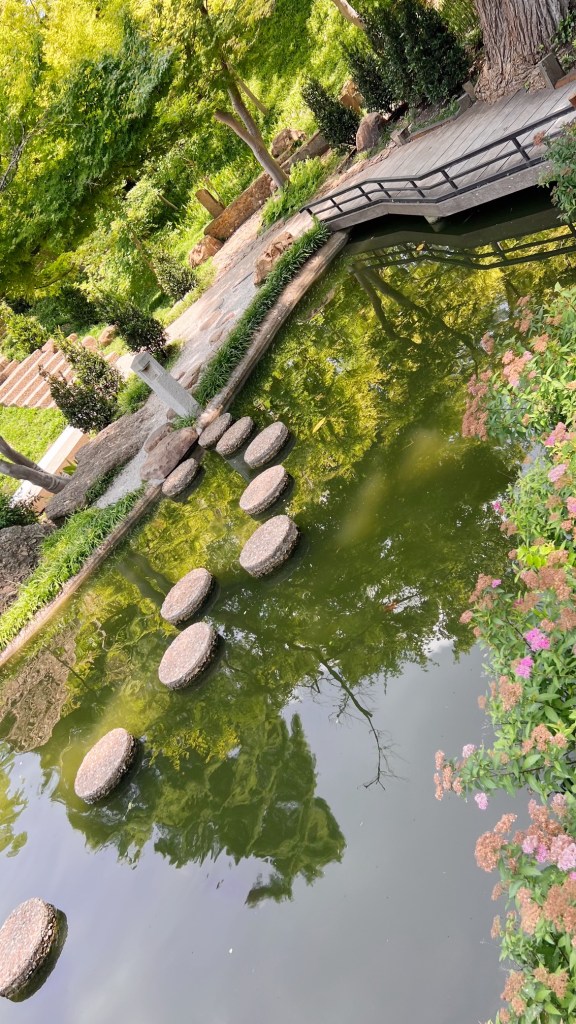
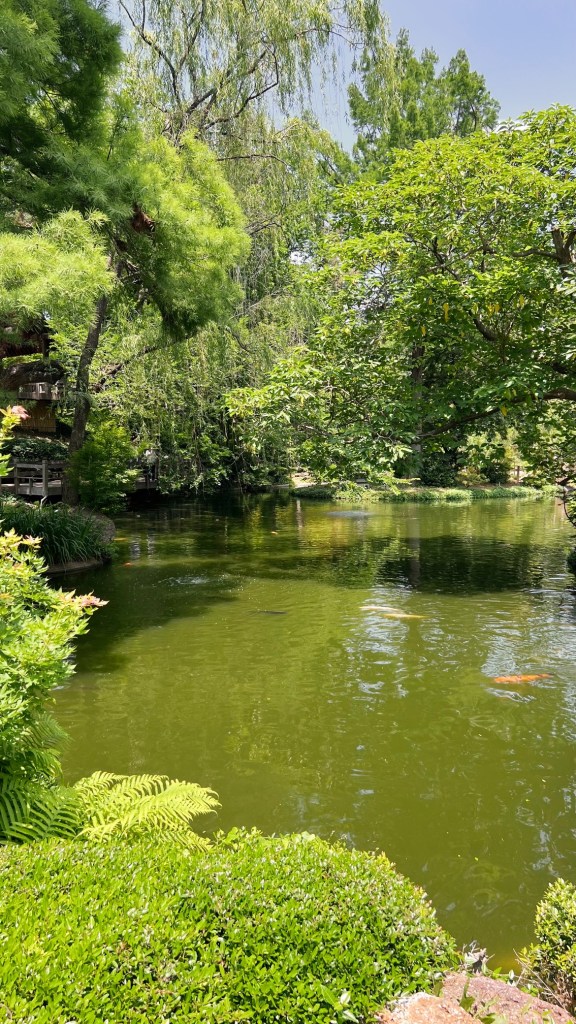
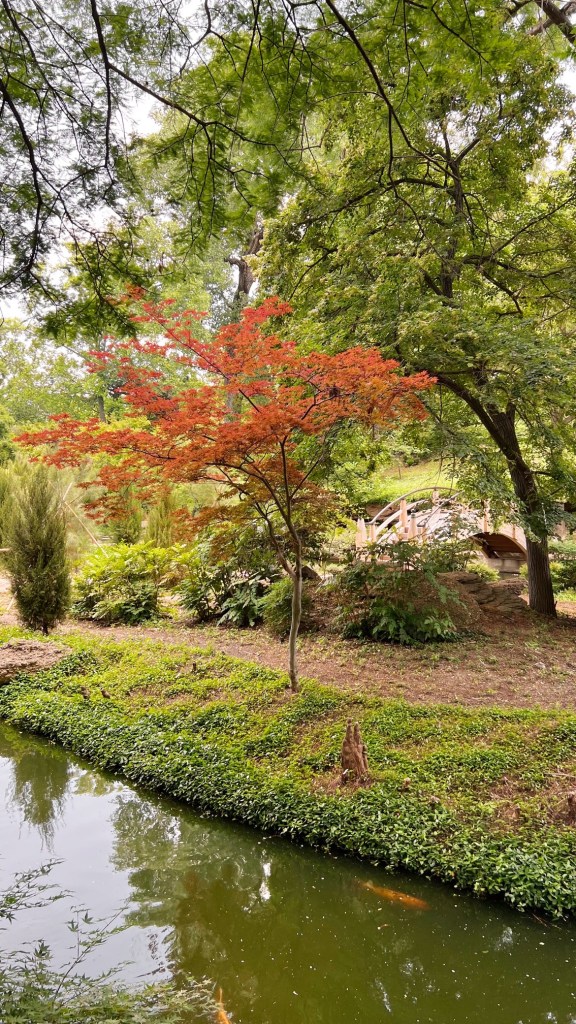
Here are some representative photos I took at the Japanese gardens in Fort Worth:


The Design
Let’s turn our attention now to the design itself. After reviewing the interior layout from the second essay, I decided that I would like to add a master bedroom on the ground floor. It will be accessed by its own separate hallway that will be behind the laundry room and the now multipurpose office/dining room. The master bedroom will have two patios: one will be a secluded patio and the other will connect with the patio on the rear of the house. It will also have its own bathroom with both shower and tub. It will also have a large walk-in closet. I am also thinking with the secluded patio there will be room to add an outdoor shower stall.
Let’s talk about the front yard. I like houses with long setbacks from the sidewalk. They remind me of houses in old movies from when I was a kid. I also like to have shade in the front yard so we will look for a site in an older neighborhood with a lot of old growth trees and big lots. We will build around the trees. I would also like three steps leading from the city sidewalk to the main concrete path that leads to the front door. We will also add a small ha-ha on either side extending out 8 feet in both directions. This will give the property a formal entrance from the sidewalk. The lawn will be standard grass that is suited to the climate where the house will be built, and we will have bushes and flowers around the base of the trees. The driveway will be on the left side of the property line and will curve away from the house to a freestanding garage that can accommodate three cars. We will also angle the garage in such a way that we don’t block off the view from the entire left side of the house. The driveway will be paved in concrete and there will be a small barrier of gravel that separates the concrete from the grass in the yard. The property line on the left side will have a wood fence and a row of privacy trees like Italian cypresses. This will give the occupants of the living room something pleasant to look at. When they look out the window, they should see a variety of different sized trees and plants and flowers. The right side of the property will have the office, dining room, and master bedroom that will be facing the front of the property. To ensure that the light from the front windows reaches both the office and formal dining room, I think we should combine these rooms into one large multipurpose room. We will want the yard in front of this room to match the yard on the left side with a combination of different sized trees, flowers, and plants. The house should be set back enough so that the large trees in our front yard don’t dominate the view. They should provide diffuse light and shade.
Now that we have an idea about the front yard, let’s switch our attention to the backyard. It is here we can utilize some of the ideas from French, English, and Japanese landscape design that we talked about above. From Japanese design, I would like to create a Japanese garden. I want to add a promenade around a water feature. We will add an aerator fountain to the pond. We will also stock the pond with some koi and some turtles. We will also add some stepping stones into the pond and create a path. We will pave the promenade path in concrete and add a small stone aggregate topper. The stones in the pond will also have aggregate toppers to match the promenade. The path will be lined with Japanese trees like maple, elm, cherry, Japanese white pine, and Japanese black pine. We will also add flowers that are typically found in Japanese gardens like azaleas, wisteria, hydrangeas, and camellias. We will put the garden at the back of the property on the right side. That way we can integrate part of the private patio off the master bedroom into the garden. To create some separation for the garden from the rest of the yard, I want to plant two basswood trees. This is because one of my favorite passages from Goethe’s book, The Sorrows of Young Werther, features the titular character sitting at a small table under two linden trees in front of a church where he drinks coffee and reads Homer. Linden is the name for the European species and basswood is the name for the North American species. As an homage to the book, I will also add a small table and two chairs.
We will borrow some elements from English landscape design for the main yard. We will have a few clumps of trees throughout the main yard of grass. We will utilize perspective in the way we plant these so that we can control the view and make sure that our grass doesn’t seem like it goes on forever. Towards the left side of the property, we will put in a ha-ha that will separate the main yard from the pool area. We will also cut a small stone staircase into the ha-ha that leads to the yard with the pool. The design for this staircase will match the front of the house. The pool will be rectangular in shape and will have a deck that circles around its perimeter. The deck for this will be concrete but I will add a textured top to give it a slightly rough-hewn look. We want this area to resemble a fertile and sun-kissed Mediterranean landscape. Set back from the pool on the left side we will plant a row of Italian cypresses to match the ones we used in the front yard. There will be a grass area between these trees and the pool deck. On the top left corner of the pool deck, I will cut in a small canal that leads from the pool to another area with a manicured French garden and a bassin. This area will be at a different elevation from the elevation of the pool. The canal will be partially obscured by small trees and plants. The bassin area will be partially hidden from view from the house. In addition to the canal, we will add a concrete path that leads to the bassin area. Around the bassin, which won’t be very large, I will add a few benches. It will be another area to sit and reflect.
The bassin area will be near where the Japanese garden ends. To connect the two, I will add some dense foliage, a tree canopy to provide shade, and a concrete path that connects to the Japanese garden and the main yard. Along the path I will add some stone sculptures and some areas to sit. I will also continue the canal so I can hear the sound of running water. The canal will lead around the main yard behind the basswood (linden) trees and will lead to the private patio off the master bedroom. This patio will feature the veranda and screening devices pointed out earlier in Japanese design. The screening devices will provide us with the seclusion we desire for this area. The design of this area will be simple with a wooden veranda where I will put a chair, a small stone courtyard, two Japanese maple trees, and a small water feature surrounded be a rock and sand garden in the center of the courtyard. This will be where our canal begins. The water will be fed from a submerged tank on the side of the house and will be recirculated using a series of pumps. A bamboo rod will empty the water into the basin. The canal will begin its journey here and will complete its journey at the pool.
The main patio outside the house will be covered by the roof that will extend out over the exterior wall. I will utilize a veranda here as well. Stepping off the veranda, there will be some small plants and shrubs that will act as a soft barrier to the grass of the yard. The yard won’t be entirely level and will gently undulate as we walk down towards the back of the property. Standing on the back patio, we will look out at a diverse and unique landscape. And this will complete the tour of the yard.
After Louis XIV completed his Versailles project, he wrote a detailed treatise on how to show his gardens to visitors. He acted as a tour guide for his own property. It was called “Manière de montrer les jardins de Versailles”. It is in this spirit that the preceding essay was written.
If the reader is interested in learning more about landscape architecture and garden design, here is a list of books I would recommend:
- The Landscape of Man: Shaping the Environment from Prehistory to the Present Day by Geoffrey Alan Jellicoe and Susan Jellicoe
- Architecture: The Natural and the Manmade by Vincent Scully
- A Japanese Touch for Your Home by Koji Yagi
 A Walk Through The City
One thought on “Designing a House Series: The Landscape Design”