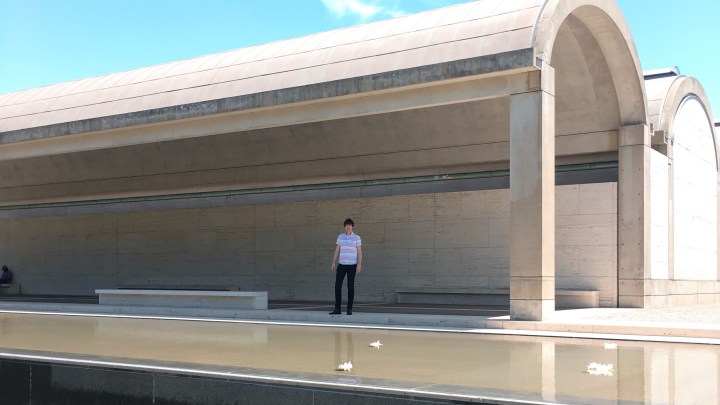
The Cultural District in Fort Worth is home to two of the most beautiful museums in the world: the Modern Art Museum of Fort Worth and the Kimbell Art Museum. They are both unique in that they were designed to enhance the experience of viewing artwork and each of them do that in their own special way. The Kimbell was designed by Louis I. Kahn and opened in 1972. The Modern was designed by Tadao Ando and opened in 2002.
Although both buildings might seem imposing at first glance, as you walk through them and experience the architecture, you find that they were designed from an empathetic perspective, which according to Geoffrey Scott, is an important factor in the architectural experience. According to Vincent Scully, the empathetic concept in architecture can be traced back to Louis Sullivan, an architect working in America around the late nineteenth century. In his book, Modern Architecture, Scully talks about Louis Sullivan’s Guaranty Building from 1895, one of the first skyscrapers, and how Sullivan followed his maxim of “form follows function” to design a building that was representative of the human experience, which is that of being “a physical force, contained but vertically standing” (page 19). Here the empathetic connection came from the relatedness of the architecture. The building, which in Scully’s words was “a drama of vertical continuity, hung weights, and human uprightness” (page 19), was designed to remind the viewer, as a human, what it was like to stand upright in a “dignified image of human potency and force” (page 19). This was important because this was in the age of the skyscraper, where every new building soared higher and higher and became less relatable on a human scale. As a result, we were becoming more and more detached from our built environment. As Scully put it, “human beings, in the mass, have been given an architectural environment which is an image of the modern world itself, in which they do not know exactly who or where they are” (page 13).
The late nineteenth century viewer was looking for a familiar figure in an increasingly unfamiliar world, which Sullivan provided in an explicitly visual form. Kahn and Ando, in their designs for the Kimbell and Modern, provided familiarity on an emotional and sensory level. The buildings were not designed so that humans would visually identify with them, but they were imbued with characteristics that allowed humans to empathize with them on an emotional level. I think the timing here has something to do with this. When the Guaranty Building was constructed, the world had yet to experience the two world wars and the global depression. But the world was rapidly modernizing, and people were experiencing new technologies at a faster pace than they were historically used to. They needed a visual reminder of what it meant to be human. When the Kimbell was constructed in the early 1970s, the people had seen the awesome and destructive power of technology. Maybe they decided they needed a more introspective reminder of what it meant to be human. What Kahn, and later, Ando, created was an aesthetically pleasing environment, separated from the reality of the outside world, where the viewer could focus all their attention on the artwork and the architecture. Both buildings serve as examples of what humans can achieve on an emotional level. I can honestly say I haven’t experienced anything quite like what I’ve experienced walking through these two museums. The most satisfying aspects of the natural world have been distilled and presented in a finite space.
Kimbell Art Museum
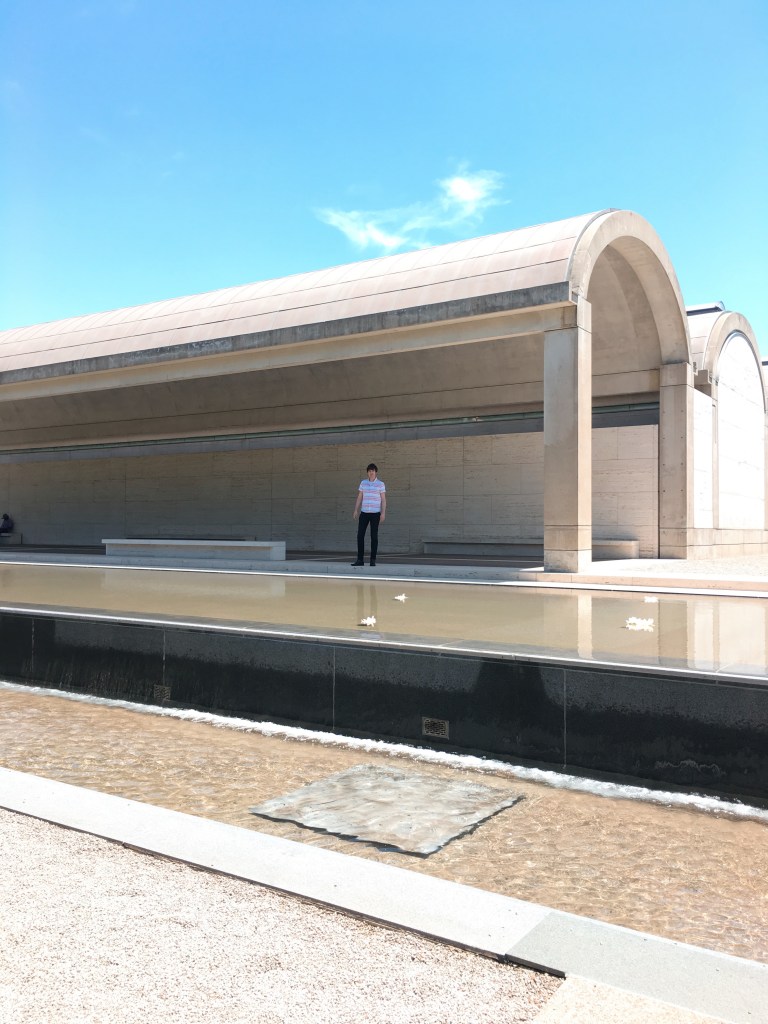
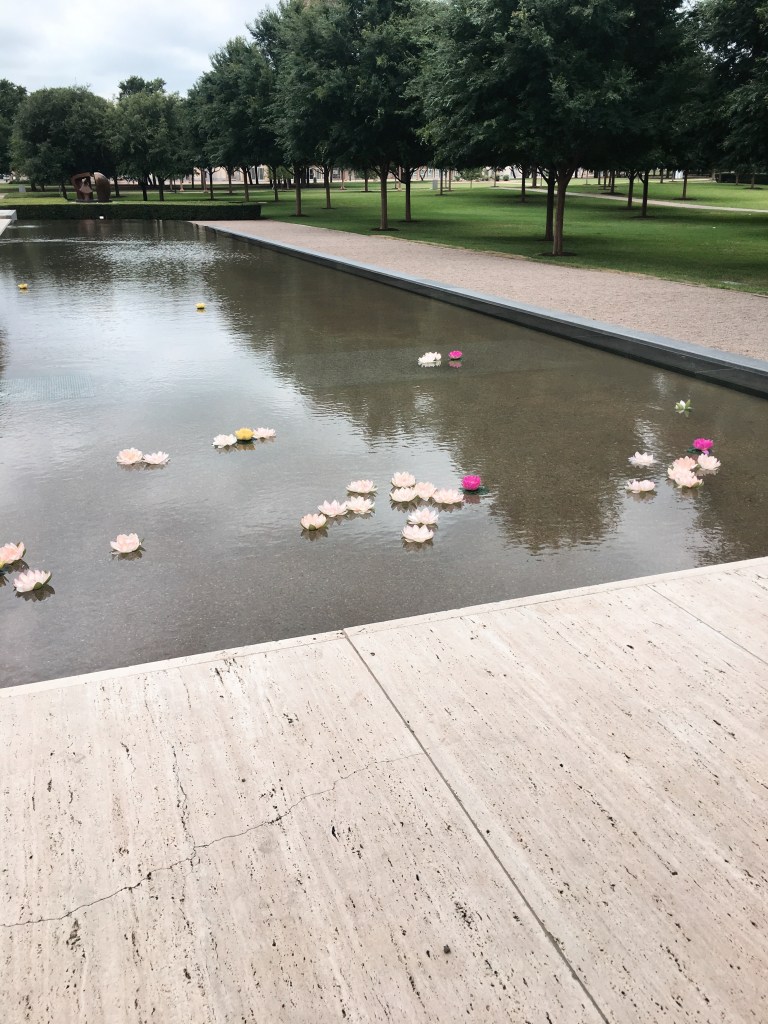
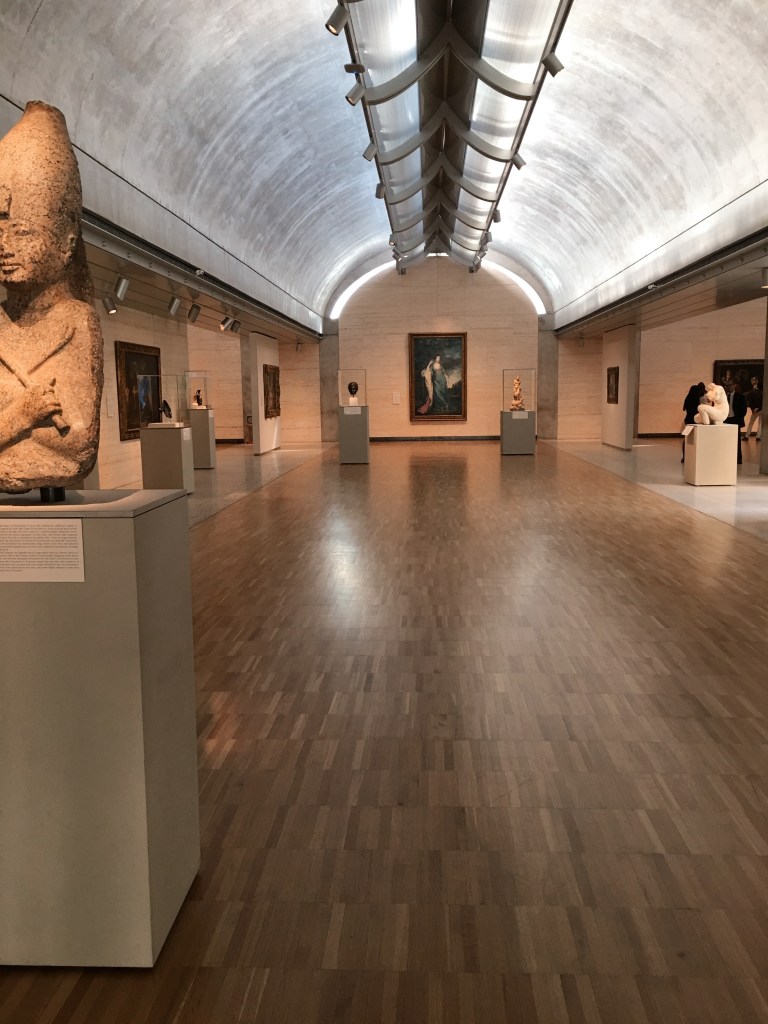
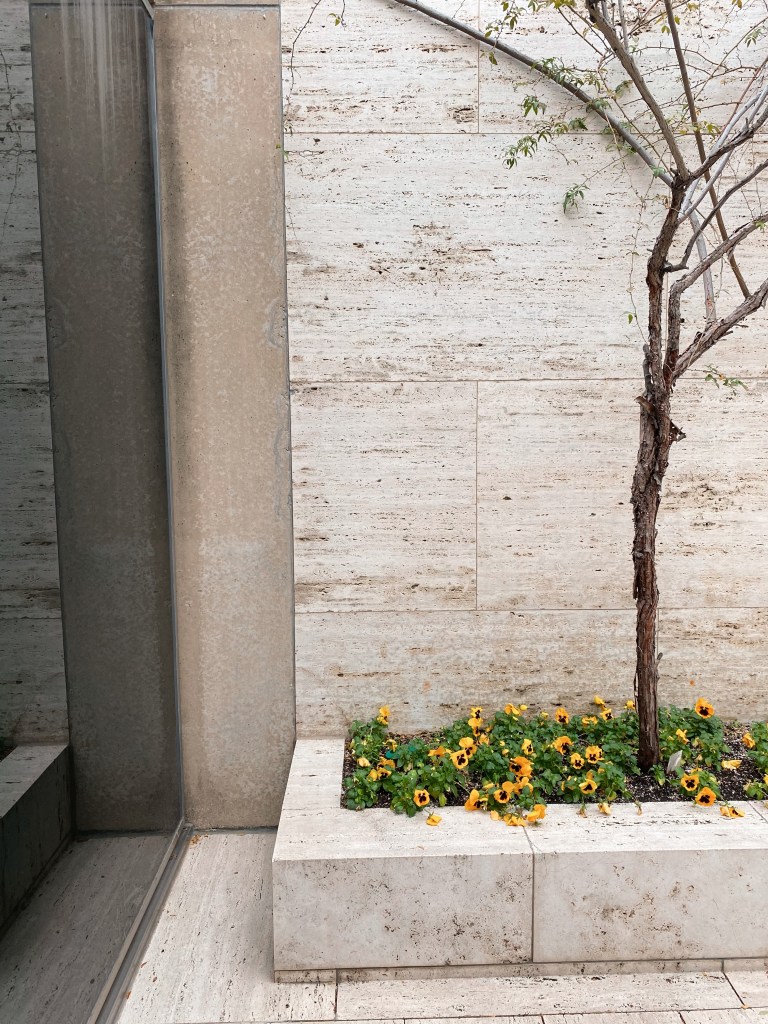
There are a few distinctive features at the Kimbell. The building is broken up into three sections: the northern section, middle section, and southern section. Both the northern and southern sections have six vaults aligned parallel to each other that span north to south while the center section has four vaults of the same design. The vaults are very distinctive and signal to the visitor that they are about to experience something they haven’t experienced before. The entrance is located in the middle section. Flanking each side of the entrance is a water feature where water from an upper pool drops like a waterfall into a lower pool. The sound of flowing water provides something of a palette cleanser before entering the museum. There are benches that sit under the outermost vaults, which are open in the style of a portico. The portico vault overlooks the water feature and allows visitors to sit and reflect after viewing the art gallery. You enter the gallery in the center of one of the long spanning vaults and you instantly feel like you are in a Roman temple. Most of the lighting in the museum comes from natural light outside. The vaults are designed to allow natural light to pour in and illuminate the gallery spaces. The museum has an airy feel to it. The gallery features artwork from many different eras going back thousands of years. They stop at the modern era, which is the domain of the Modern next door. They also don’t feature any American art, which is the domain of the nearby Amon Carter Museum. But there is something for everyone. The walls are also faced in travertine, which is an elegant and unique building material. It is also a historical nod to construction in Ancient Rome as many of the Roman monuments and temples were built out of travertine. Visiting the Kimbell is truly a memorable experience and one that I hope everyone gets a chance to see in their lifetime.
My favorite feature is located in the southern section of vaults. In the center of the gallery space, there is a small open-air courtyard with a fountain. The gallery is quiet apart from the hushed whispers of the other visitors but when you walk through the door, you are immediately surrounded by the sound of running water. There are some trees and bushes in the planters on each side of the fountain. It’s a great place to take a pause from the overwhelming beauty of the museum and reenergize your senses.
Modern Art Museum of Fort Worth
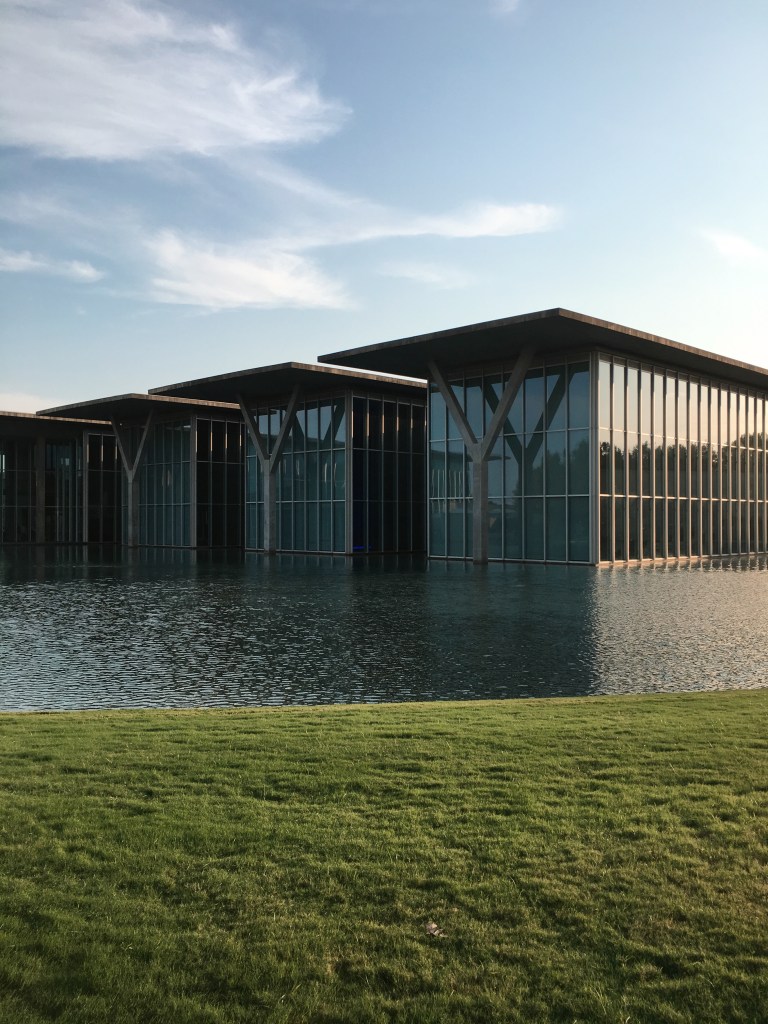
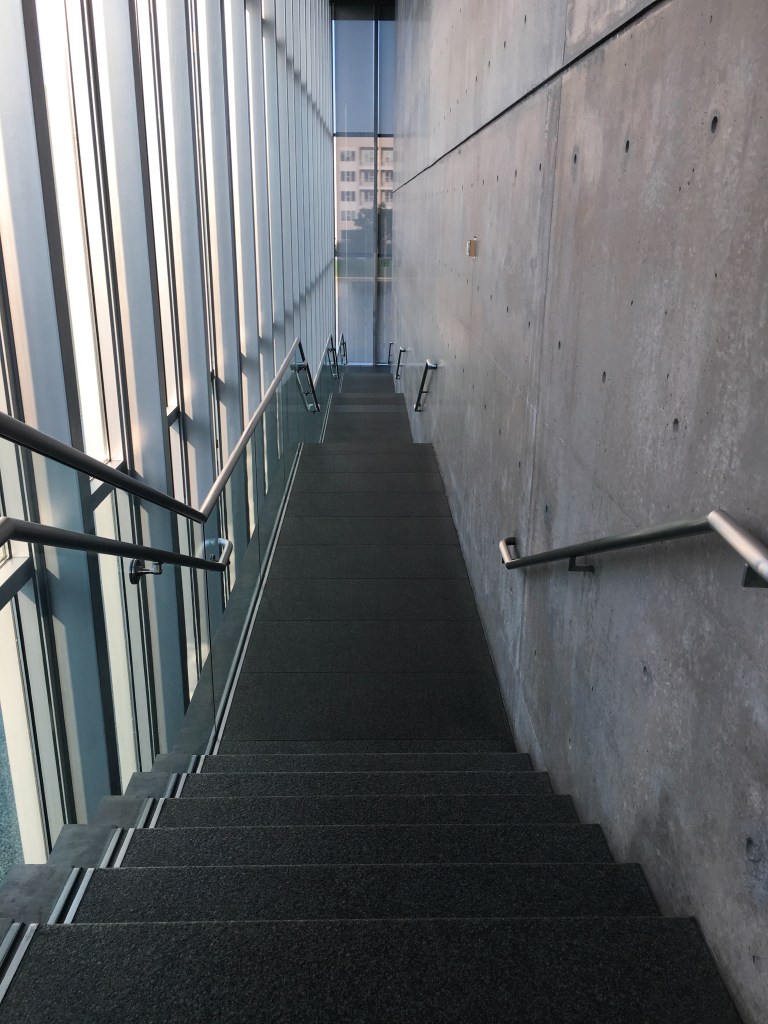
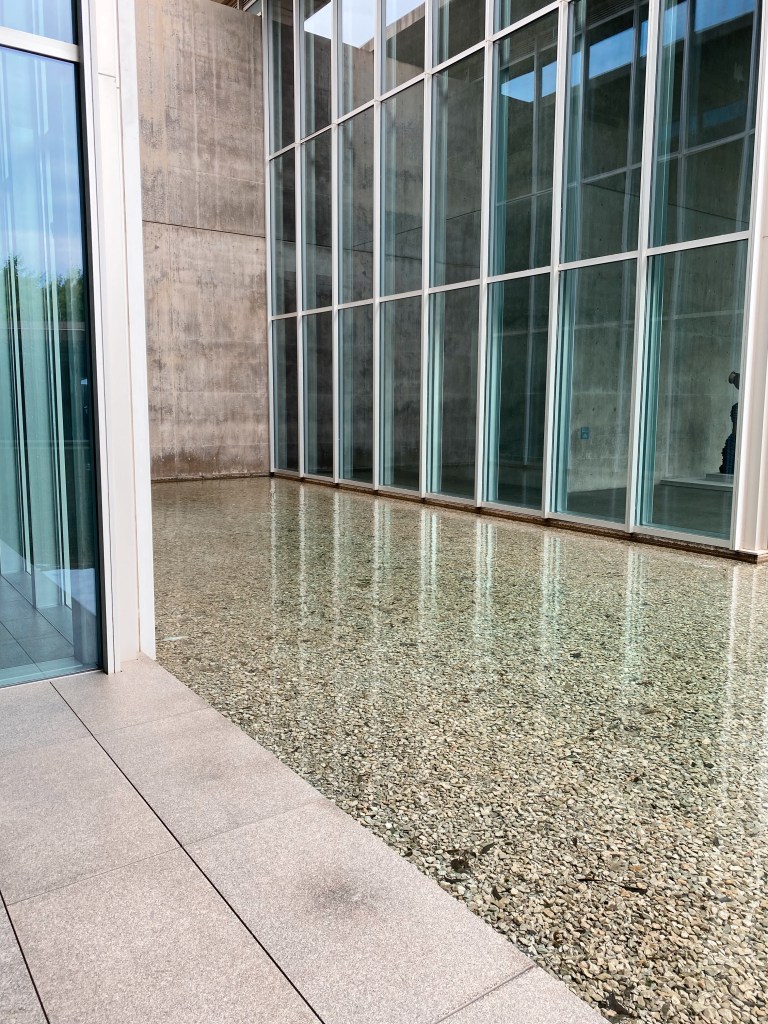
The Modern shares a lot of similarities with the Kimbell, but the two museums are different stylistically. While the Kimbell is a series of vaults faced in travertine, which has a distinctive color and texture, The Modern by comparison is a large, open, L-shaped box and is constructed of concrete and glass. The walls that are facing the parking lot are faced with metal panels, except for the entrance atrium, which is made up entirely of windows. The rear of the building looks out onto a shallow fountain with a rocky floor. That part of the building is faced entirely in windows. There are three “bays” that extend out and overlook the fountain. The massive concrete slab roof over these bays seems to be help up by large concrete columns that look like trees without the leaves. One of the most beautiful features is a long staircase that sits along the rear wall of windows that leads to the second-floor gallery. The view is beautiful. The gallery spaces are a series of rooms with soft white walls. Each gallery has room to display a large canvas. The interplay between the spaces and the solids is what makes the museum visually appealing. The second-floor gallery space seems to float above the first-floor gallery space. There are numerous areas where the second floor stops short, and visitors can look out over the railing to the first floor to see artwork from above. Some of the artwork in the gallery seems to have been made specifically for viewing from this angle. Whereas the Kimbell gallery is open, the Modern is more partitioned, and there are lots of alcoves and small rooms to explore. The anticipation of what you might find in each room makes for a pleasurable viewing experience. I mentioned earlier how the Kimbell makes the visitor feel like they are visiting a Roman temple. The Modern makes you feel like you are in a clearing in the middle of a vast forest. Diane Ghirardo, in her book Architecture After Modernism, describes Tadao Ando’s architecture as attempting to “achieve an oasis of stillness in harmony with nature” (page 97). I can’t think of a better description to summarize the experience of walking through the Modern. Like the Kimbell, I hope it is something everyone can experience at least once in their lifetime.
My favorite feature in the Modern is the atrium in the entrance. It is sprawling and seems to rise forever. After walking around the gallery, it is the perfect place to rest and reflect on what you just saw. There is a row of benches near the rear wall of windows where you can sit and look out on to the fountain in the back.
 A Walk Through The City
One thought on “A Visual Delight: Modern Art Museum of Fort Worth & Kimbell Art Museum”